

 Arduino
Arduino Uno R3
Best entry-level microcontroller for electronics hobbyists and creative makers.

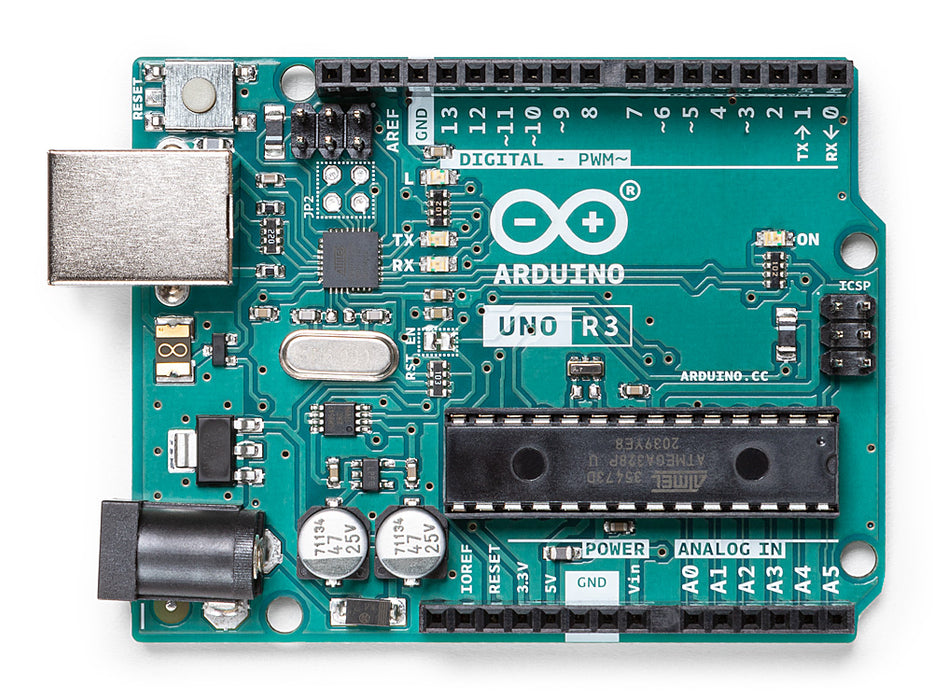
The Arduino Uno R3 is a popular microcontroller board perfect for learning electronics and building interactive projects. It features the ATmega328 microcontroller, offering 20 digital I/O pins (6 with PWM) and 6 analog inputs for connecting sensors and components. Power can be supplied via USB or a DC jack, with a recommended input voltage of 7-12V. This R3 version includes an updated USB controller and additional pins for improved connectivity. With 32KB of flash memory and extensive community support, it's a versatile and accessible platform for makers of all levels.
$24.79
More Arduino UNO Options

Owner Satisfaction
4.7
/ 5
Category Rank
28
/ 1541
#28 in Development Boards
Price vs Category Average
-72%
Below average
Microcontroller
328
/ ATmega
Who it's for
- Novice makers starting their journey into electronics and coding
- Learners needing extensive documentation and community troubleshooting resources
- Prototypers requiring quick hardware expansion via standardized shields
Who should skip it
- Engineers building complex, data-heavy, or high-speed applications
- Developers creating connected IoT projects without external hardware
- Budget-conscious hobbyists seeking maximum performance per dollar
Performance breakdown
Learning Curve
The gold standard for beginners entering the world of physical computing.
Community Support
Unrivaled access to tutorials, libraries, and troubleshooting forums worldwide.
Hardware Compatibility
Standardized pinout ensures seamless integration with a vast ecosystem of shields.
Processing Power
The 16MHz clock speed is sufficient for basics but limits complex tasks.
Build Durability
Robust construction withstands repeated prototyping and classroom handling.
Programming Accessibility
The Arduino IDE makes uploading code straightforward for every skill level.
Key Specs
Microcontroller
ATmega328
Operating Voltage
5 V
Recommended Input Voltage
7-12 V
Flash Memory
32 KB
SRAM
2 KB
Clock Speed
16 MHz
Dimensions
53.34mm x 75.0mm
Weight
28 g
Features
- ATmega328 microcontroller for reliable performance
- 20 digital I/O pins, 6 with PWM capabilities
- 6 analog input pins for sensor integration
- Flexible power options via USB or DC jack
- Extensive community and library support
- Compatible with a wide range of Arduino shields
- Updated USB-to-serial converter for easy programming
- Convenient on-board reset button
What customers say
The Arduino Uno R3 remains the benchmark for introductory electronics due to its exceptional reliability and robust build quality. Customers consistently value its superior component quality, which justifies the investment over generic alternatives. Satisfaction centers on its accessibility; the plug-and-play interface, excellent documentation, and massive global community make learning remarkably smooth for beginners and educators. Reviewers emphasize that the extensive ecosystem ensures compatibility with numerous accessories. While processing power is limited compared to newer boards, the Uno R3 is universally recognized as an essential, dependable tool. Its reputation for simply always working confirms its outstanding long-term value as the perfect gateway to physical computing.
Know before you buy
The R3 version features an updated USB-to-serial converter for more reliable programming and includes additional pins for better connectivity with shields and components.
Yes, you can power the board through the DC barrel jack using an external power supply or battery pack. The recommended input voltage for this method is between 7V and 12V.
Yes, the R3 follows the standard Arduino form factor and pinout, making it compatible with the vast majority of shields designed for the Arduino ecosystem.
You will need to download and install the Arduino IDE, which is the official development environment used to write, compile, and upload code to the board via USB.
You can connect up to 6 analog sensors and a variety of digital sensors using the 20 available digital I/O pins. The total number of sensors depends on the specific communication protocol each sensor requires, such as I2C or SPI.
Absolutely. It is widely considered the industry standard for learning electronics because of its simple architecture, vast library support, and massive online community that provides tutorials for almost any project.

Still have a question?
Ask Hayley anything about this product before you decide.
Ready to buy?
$25