

 Arduino
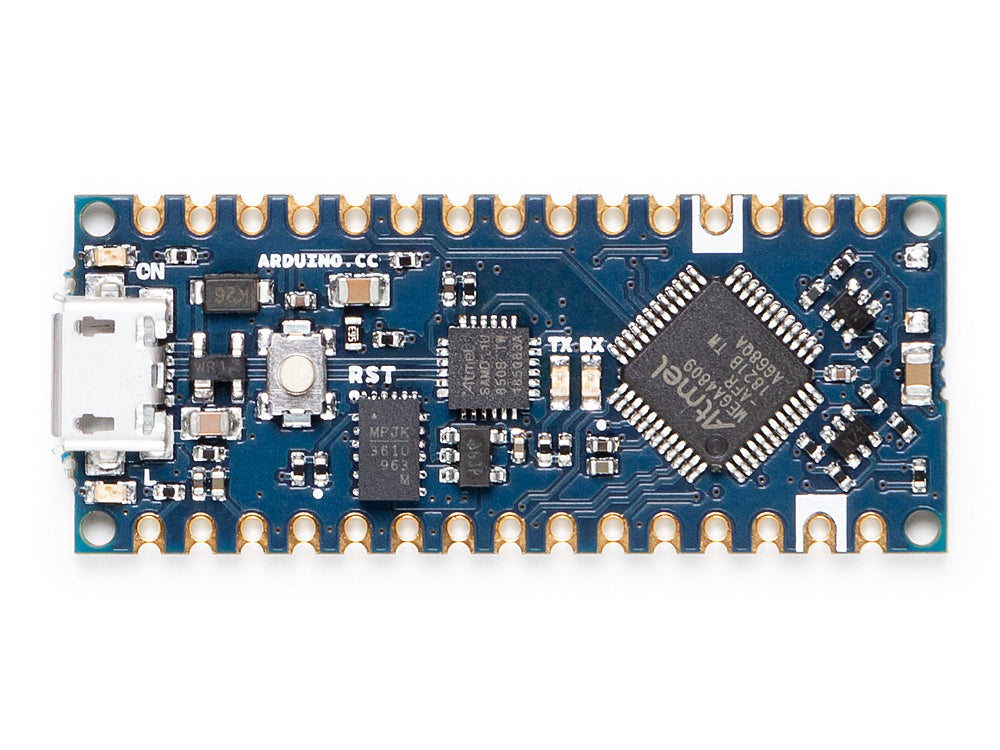
Arduino Nano Every
Best compact microcontroller for space-constrained electronics projects.

The Arduino Nano Every is a compact and powerful microcontroller board, perfect for projects requiring a small footprint and enhanced performance. It features the upgraded ATMega4809 processor, offering significantly more program memory and RAM compared to the Arduino Uno. This 5V compatible board operates at 20MHz and provides versatile I/O, including 8 analog inputs and 5 PWM channels. With its micro-B USB port for easy programming and pre-soldered headers, the Nano Every is an excellent choice for both beginners and experienced makers looking for a miniature yet capable development platform.
$17.55
More Arduino Nano Options
Owner Satisfaction
4.7
/ 5
Category Rank
28
/ 1544
#28 in Development Boards
Price vs Category Average
-80%
Below average
Microcontroller
4809
/ ATMega
Who it's for
- Developers needing extra memory for complex, resource-heavy projects
- Makers integrating boards into existing breadboard-based hardware designs
- Engineers requiring reliable power for demanding peripheral components
Who should skip it
- Hobbyists working primarily with modern 3.3V sensors and modules
- Coders relying heavily on legacy ATMega328P-specific libraries
- Budget-conscious users seeking affordable alternatives to official hardware
Performance breakdown
Processing Power
The ATMega4809 chip delivers a significant performance boost over standard boards.
Form Factor
Ultra-compact footprint makes it perfect for space-constrained DIY projects.
I/O Versatility
Eight analog inputs provide ample connectivity for complex sensor arrays.
Ease of Setup
Pre-soldered headers allow for immediate prototyping right out of the box.
Memory Capacity
Expanded flash and RAM handle larger codebases with ease and stability.
Power Flexibility
Wide input voltage range supports diverse power sources for mobile applications.
Key Specs
Microcontroller
ATMega4809
Operating Voltage
5V
Input Voltage (limit)
21V
DC Current per I/O Pin
20 mA
DC Current for 3.3V Pin
50 mA
Clock Speed
20MHz
CPU Flash Memory
48KB
SRAM
6KB
Features
- Upgraded ATMega4809 processor for enhanced performance
- Increased program memory and RAM over Arduino Uno
- Compact, smallest available Arduino form factor
- Fully 5V compatible operation
- Headers pre-soldered for immediate use
- 8 dedicated 10-bit analog inputs
- Lightweight design at only 5 grams
- Ideal for compact and complex projects
What customers say
The Arduino Nano Every earns high praise for successfully modernizing the classic form factor with superior performance. Users value the ATMega4809 microcontroller, which enables significantly more complex projects due to expanded memory and faster speeds. A key benefit is the retention of the original pinout, ensuring easy integration with existing shields and breadboards for established users. Quality is consistently noted as excellent, reflecting dependable reliability for both prototyping and final integration. While a few users report minor initial setup hurdles transitioning architectures, the Nano Every is widely regarded as a fantastic value, delivering powerful AVR development in a compact, hobbyist friendly package.
Know before you buy
The Nano Every features the more powerful ATMega4809 processor, offering more program memory and RAM in a significantly smaller footprint. While it is fully 5V compatible like the Uno, its compact size makes it better suited for space-constrained projects.
No, the Nano Every comes with headers pre-soldered, allowing you to plug it directly into a breadboard or connect jumper wires immediately out of the box.
Yes, the board supports an input voltage range of 7V to 21V via the VIN pin, providing flexibility for battery-powered or external power supply projects.
The Nano Every does not have a dedicated DAC for true analog output. However, you can simulate analog signals using its 5 PWM channels.
Yes, it is fully compatible with the Arduino IDE. You can program it just like other Arduino boards using the micro-B USB port.
Each digital I/O pin can provide up to 20 mA of DC current. Ensure your peripherals do not exceed this limit to prevent damage to the board.

Still have a question?
Ask Hayley anything about this product before you decide.