

 Arduino
Arduino Mega 2560 R3
Best choice for makers tackling complex, hardware-intensive electronics projects.

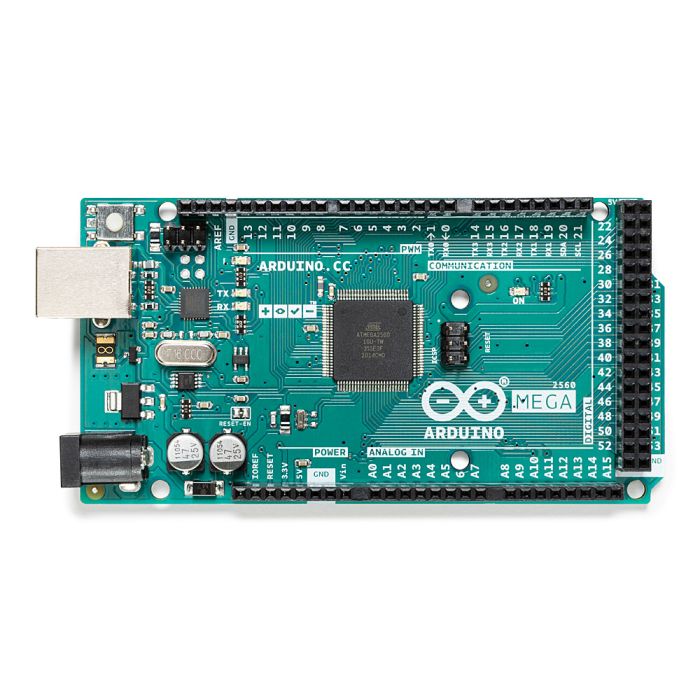
Introducing the Arduino Mega 2560 Rev3, an 8-bit microcontroller board designed for complex projects and upgrades. Built around the ATmega2560, it boasts 54 digital I/O pins (15 PWM), 16 analog inputs, and 4 hardware serial ports. With a 16 MHz crystal oscillator and USB connectivity, it's easy to get started. Power it via USB, adapter, or battery. This board is compatible with many Arduino shields, offering flexibility for expansion. It features 256 KB of Flash memory and 8 KB of SRAM, making it a robust choice for ambitious makers and developers.
$44.49
Owner Satisfaction
4.7
/ 5
Category Rank
28
/ 1541
#28 in Development Boards
Price vs Category Average
-49%
Below average
Microcontroller Processor
2560
/ ATmega
Who it's for
- Engineers building complex systems with many sensors and actuators
- Developers managing large, memory-intensive codebases
- Makers integrating multiple serial devices simultaneously
Who should skip it
- Designers creating compact or space-constrained embedded projects
- Budget-conscious hobbyists who do not require extensive I/O
- Programmers needing high-speed processing for real-time calculations
Performance breakdown
I/O Connectivity
Fifty-four digital pins provide unmatched versatility for complex, multi-sensor hardware projects.
Shield Compatibility
Standardized layout ensures seamless integration with a vast ecosystem of expansion shields.
Processing Capacity
The 8-bit architecture handles demanding logic but shows age against modern microcontrollers.
Development Accessibility
The mature Arduino IDE ecosystem makes programming intuitive for beginners and experts.
Memory Constraints
Limited SRAM requires careful code optimization for memory-intensive data logging tasks.
Hardware Reliability
Robust build quality ensures consistent performance in long-term, continuous operation environments.
Key Specs
Microcontroller Processor
ATmega2560
Connectivity Protocol
Not specified
USB Interface Type
USB-B
Operating Voltage
5.0 Volts
RAM Capacity
8.0 MB
Flash Memory Capacity
256.0 MB
GPIO Pin Count
54
Clock Speed
16 MHz
Features
- Expansive I/O for complex projects
- High compatibility with existing shields
- Multiple power options for flexibility
- Robust microcontroller for demanding tasks
- Ideal for upgrading existing Arduino projects
- Easy USB connectivity for development
- Ample memory for advanced applications
- Durable and reliable for continuous use
What customers say
Customers overwhelmingly view the Arduino Mega 2560 R3 as the essential workhorse for complex prototyping. Its core strength lies in its extensive capability, particularly the massive number of digital and analog pins, which easily overcomes the resource limitations of smaller boards. This extensive I/O capacity, combined with substantial memory, makes it the default choice for ambitious projects like advanced robotics and large sensor arrays. Users highly value the official board's superior build quality and proven reliability, confirming that the investment is justified by its robust performance and longevity. While its size can be a drawback for compact builds, the Mega remains an indispensable tool for serious makers tackling resource intensive challenges.
Know before you buy
The Mega 2560 is significantly more powerful, offering 54 digital I/O pins compared to the Uno's 14, and 16 analog inputs versus the Uno's 6. It also features substantially more Flash memory and SRAM, making it the better choice for complex projects that require more sensors, displays, or advanced code.
Yes, the Mega 2560 R3 is designed to be compatible with most shields designed for the Arduino Uno. Its pin layout follows the standard form factor, allowing for easy expansion and integration with your current hardware collection.
You can power the board via the USB connection, an external DC power adapter, or a battery. The recommended input voltage for the DC jack is between 7V and 12V to ensure stable operation.
Yes, the Mega 2560 features four hardware serial ports (UARTs). This allows you to communicate with multiple serial devices simultaneously, such as a computer, a GPS module, and a Bluetooth sensor, without needing to use software serial emulation.
While it is a powerful tool for advanced developers, it is very accessible for beginners. It uses the same Arduino IDE and programming language as other Arduino boards, so if you have experience with the Uno, you will find the transition to the Mega straightforward.
Each digital I/O pin can provide or receive a maximum of 20 mA. It is important to stay within this limit to avoid damaging the microcontroller when connecting external components like LEDs or sensors.

Still have a question?
Ask Hayley anything about this product before you decide.