


Raymarine Quantum Q24C 18" CHIRP Radar
Best compact radar for boaters prioritizing easy installation and clear imaging.

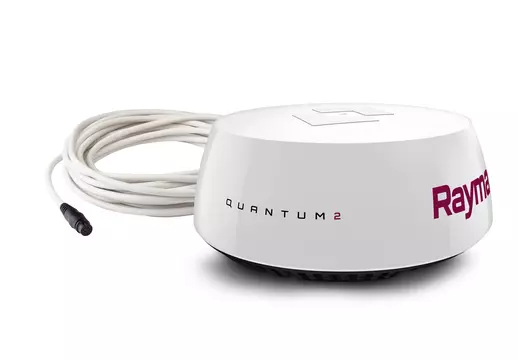
The Raymarine Quantum Q24C is an 18-inch CHIRP Dome Radar offering superior imaging and simplified integration for your vessel. It utilizes CHIRP pulse compression to enhance the detection of small, weak objects, providing excellent separation and clarity. This solid-state radar features low power consumption and safer emissions, connecting easily via Wi-Fi or Raynet to compatible Raymarine MFDs. With FLIR’s ATX technology for unsurpassed target resolution, it’s an ideal choice for boaters seeking advanced radar performance with straightforward installation and operation.
$1799.00
More Quantum Options
Owner Satisfaction
4.6
/ 5
Category Rank
106
/ 176
#106 in Marine Radar
Price vs Category Average
-33%
Below average
Antenna Type
18
/ ” Dome Radome
Who it's for
- Captains navigating busy harbors and tight waterways
- Boaters seeking a simple, clutter-free installation process
- Sailors prioritizing energy efficiency and immediate situational awareness
Who should skip it
- Offshore cruisers requiring long-range weather and target detection
- Skippers using mixed-brand marine electronics systems
- Owners hoping to avoid all structural wiring work
Performance breakdown
Target Resolution
FLIR ATX technology delivers exceptional clarity for identifying small, nearby objects.
Installation Simplicity
Lightweight design and wireless connectivity make mounting and setup remarkably straightforward.
Energy Efficiency
Solid-state pulse compression keeps power draw minimal during active operation.
Detection Range
The 24-nautical-mile limit is perfect for coastal cruising and recreational navigation.
Connectivity Versatility
Seamless integration via Wi-Fi or Raynet offers flexible MFD networking options.
Operational Safety
Low-emission solid-state technology ensures safer operation for crew and passengers.
Key Specs
Antenna Type
18” Dome Radome
Technology
CHIRP Pulse Compression, Solid State
Maximum Range
24 Nautical Miles
Power Consumption
17W transmit, 7W standby
Horizontal BeamWidth
4.9°
Dimensions
21.3"W x 8.25"H
Connectivity
Wi-Fi or Raynet (Ethernet)
Cable Included
15M Power/Data Cable
Features
- Superior target detection with CHIRP
- Lightweight for easy installation
- Low power consumption
- Safer solid-state emissions
- Enhanced target separation and clarity
- Wi-Fi and Ethernet connectivity
- Up to 24NM range
- FLIR ATX technology for resolution
What customers say
Customers consistently praise the Raymarine Quantum Q24C radar for its exceptional short-range performance and target separation, making navigation safer in tight or low visibility conditions. Users value the ability to clearly distinguish small objects like kayaks and buoys. A major highlight is the simplified setup, thanks to the lightweight design and wireless connectivity options, which appeal greatly to boaters installing their own equipment. The system also offers the benefit of low power consumption. While the initial cost is high, reviewers agree that the superior technology, reliability, and enhanced safety features provide excellent overall value, confirming its status as a premium, high-confidence upgrade.
Know before you buy
CHIRP pulse compression uses multiple frequencies to send a longer pulse, which allows the radar to see smaller, weaker targets with much higher clarity. This results in superior separation between objects that might otherwise blur together on a traditional radar display.
Yes, the Q24C supports Wi-Fi connectivity, allowing you to link it to compatible Raymarine Multifunction Displays without running a data cable to the helm. Alternatively, you can use a wired Raynet Ethernet connection for a more traditional, hardwired setup.
Absolutely. Because it uses solid-state technology, it consumes significantly less power than traditional magnetron radars, drawing only 17W while transmitting and 7W in standby mode.
The Q24C provides a maximum range of 24 nautical miles, making it well-suited for coastal cruising and navigating in low-visibility conditions.
Its lightweight design makes it relatively easy to mount compared to larger, heavier open-array systems. While you will need to handle the power connection and mounting, the wireless integration option simplifies the overall installation process significantly.
Solid-state technology eliminates the need for a high-voltage magnetron, resulting in safer, lower-power emissions and a longer service life. It also allows for near-instant startup, so you don't have to wait for the radar to warm up before it begins scanning.

Still have a question?
Ask Hayley anything about this product before you decide.