

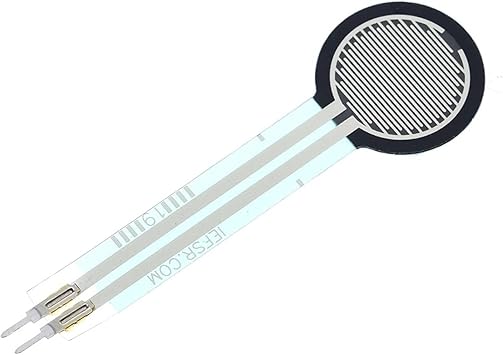
SBTRKT FSR402 Force Sensitive Resistor

The SBTRKT FSR402 is a flexible force-sensitive resistor designed for various electronic projects. This sensor utilizes advanced nanometer pressure-sensitive materials integrated onto an ultra-thin film substrate, enabling highly sensitive pressure detection. A key advantage is its dual functionality, offering both pressure sensitivity and water resistance. When external pressure is applied, the sensor's resistance changes proportionally. This variation can then be easily converted into a corresponding electrical output using a simple accompanying circuit, making it a versatile component for sensing applications.
$33.31
Owner Satisfaction
4.4
/ 5
Category Rank
362
/ 413
#362 in Resistors
Price vs Category Average
-75%
Below average
Material
Nanometer pressure-sensitive materials on ultra-thin film substrate
/ Nanometer pressure-sensitive materials on ultra-thin film substrate
Who it's for
- Simple Integration
- Thin and Flexible Profile
- Low Cost
Who should skip it
- Poor Linearity and Accuracy
- Limited Dynamic Range
- Susceptibility to Drift
Key Specs
Material
Nanometer pressure-sensitive materials on ultra-thin film substrate
Resistor Type
Force Sensitive Resistor
Model Number
FSR402
Quantity per Pack
1
Color/Kit Detail
0.5 Inch FSR DIY Kit
Resistor Composition
Thin Film
Special Features
Non-Inductive
Features
- Highly sensitive pressure detection
- Flexible nanometer material design
- Integrated water-resistant function
- Resistance changes with applied pressure
- Simple circuit for electrical output
- Built on ultra-thin film substrate
What customers say
The SBTRKT FSR402 is highly praised in prototyping circles for its compact, circular design, making integration into small projects easy. Its primary strength is offering excellent value, serving well for simple threshold detection and proof of concept work with microcontrollers like Arduino. Hobbyists appreciate the smooth setup experience due to its compatibility. However, users seeking precise measurements must note the sensor's inherent non-linearity. Achieving accurate, repeatable force readings requires significant calibration and external circuitry, which can challenge beginners. While durable for light use, long term stability under repeated high force cycles is a consideration. Overall, it is a functional, cost effective component for rapid prototyping when its technical limitations are understood.

Still have a question?
Ask Hayley anything about this product before you decide.