

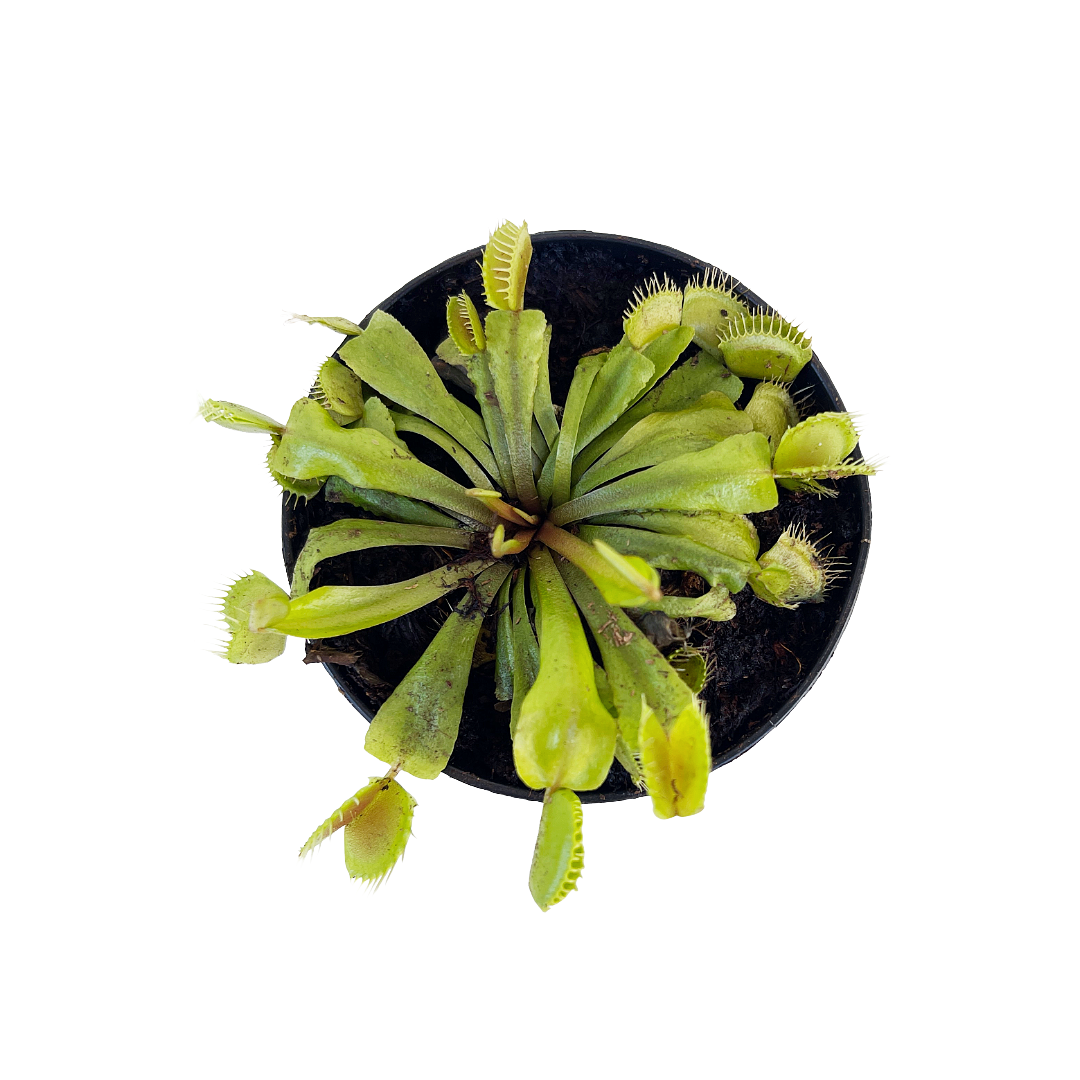
Dionaea muscipula (Venus Fly Trap)
Best carnivorous plant for dedicated hobbyists seeking a unique botanical challenge.

Discover the fascinating Dionaea muscipula, commonly known as the Venus Flytrap, a unique carnivorous houseplant native to the Carolinas. This engaging plant thrives in bright, direct sunlight and requires consistently moist, acidic soil. It's important to use only distilled or rainwater to protect its sensitive roots. While non-toxic to pets, this plant demands a specific winter dormancy period to ensure its health and longevity, making it a rewarding specimen for plant enthusiasts seeking a distinctive addition to their collection.
$22.00
Owner Satisfaction
4.6
/ 5
Category Rank
3537
/ 9457
#3537 in Potted Houseplants
Price vs Category Average
-58%
Below average
Scientific Name
Dionaea muscipula
/ Dionaea muscipula
Who it's for
- Aspiring botanists interested in unique plant biology and adaptations
- Curious plant lovers seeking a dynamic, interactive home display
- Eco-conscious homeowners managing minor indoor pest issues naturally
Who should skip it
- Busy owners preferring the convenience of standard tap water
- Casual gardeners lacking space for specialized grow light setups
- Beginners wanting a low-maintenance plant without seasonal care cycles
Performance breakdown
Biological Engagement
Watching the traps snap shut provides unmatched interactive botanical entertainment.
Care Complexity
Strict water and dormancy requirements demand a dedicated, attentive plant parent.
Light Dependency
Requires intense, direct sun exposure to maintain vibrant, healthy traps.
Pet Safety
Non-toxic composition offers total peace of mind for curious household pets.
Maintenance Rigor
Distilled water and specific soil mixes make daily upkeep quite demanding.
Visual Impact
A striking, sculptural specimen that serves as a bold conversation starter.
Key Specs
Scientific Name
Dionaea muscipula
Native Region
North and South Carolina, USA
Pot Size
4 inches
Light Requirement
Full sun, ideally 12 hours of bright, direct light
Dormancy Temperature
40°F to 50°F (4°C to 10°C)
Soil Preference
Well-draining, acidic mix (sphagnum moss, peat moss, perlite)
USDA Hardiness Zones
7-10
Care Level
Intermediate
Features
- Naturally catches insects for supplemental feeding
- Requires specific winter dormancy
- Sensitive to minerals; needs distilled water
- Non-toxic to common household pets
- Thrives in full sun conditions
- Engaging carnivorous plant specimen
- Requires consistently moist, acidic soil
What customers say
Customers consistently praise the exceptional quality and robust health of the Dionaea muscipula upon arrival. The secure and careful packaging is frequently noted, ensuring the plant arrives vibrant and undamaged, which is crucial for live shipments. Although these carnivorous plants require specific attention, the included clear instructions greatly enhance the perceived ease of use. This thoughtful support makes the plant accessible and rewarding for both experienced enthusiasts and curious beginners alike.
Know before you buy
While the plant naturally catches insects for supplemental nutrients, it does not require manual feeding to survive. If kept indoors, it will thrive just fine without regular insect meals, provided it receives adequate sunlight.
Venus Flytraps are extremely sensitive to minerals and chemicals found in tap water, which can burn their roots and eventually kill the plant. Always use distilled water, deionized water, or collected rainwater to keep your plant healthy.
During winter, the plant enters a natural resting phase where growth slows significantly. You should move it to a cooler location between 40°F and 50°F and reduce watering slightly, though the soil must never dry out completely.
Only if that windowsill receives at least 12 hours of bright, direct sunlight daily. Because these plants are native to open bogs, they struggle in low-light conditions and will likely require a supplemental grow light if you cannot provide intense natural sun.
Yes, the Dionaea muscipula is non-toxic to common household pets. While it is safe, the traps are delicate, so it is best to place the plant in a spot where curious paws won't accidentally trigger or damage the leaves.
The soil should remain consistently moist at all times. The most effective method is to place the pot in a shallow tray filled with about an inch of distilled water, allowing the plant to soak up moisture from the bottom as needed.

Still have a question?
Ask Hayley anything about this product before you decide.
Ready to buy?
$22