

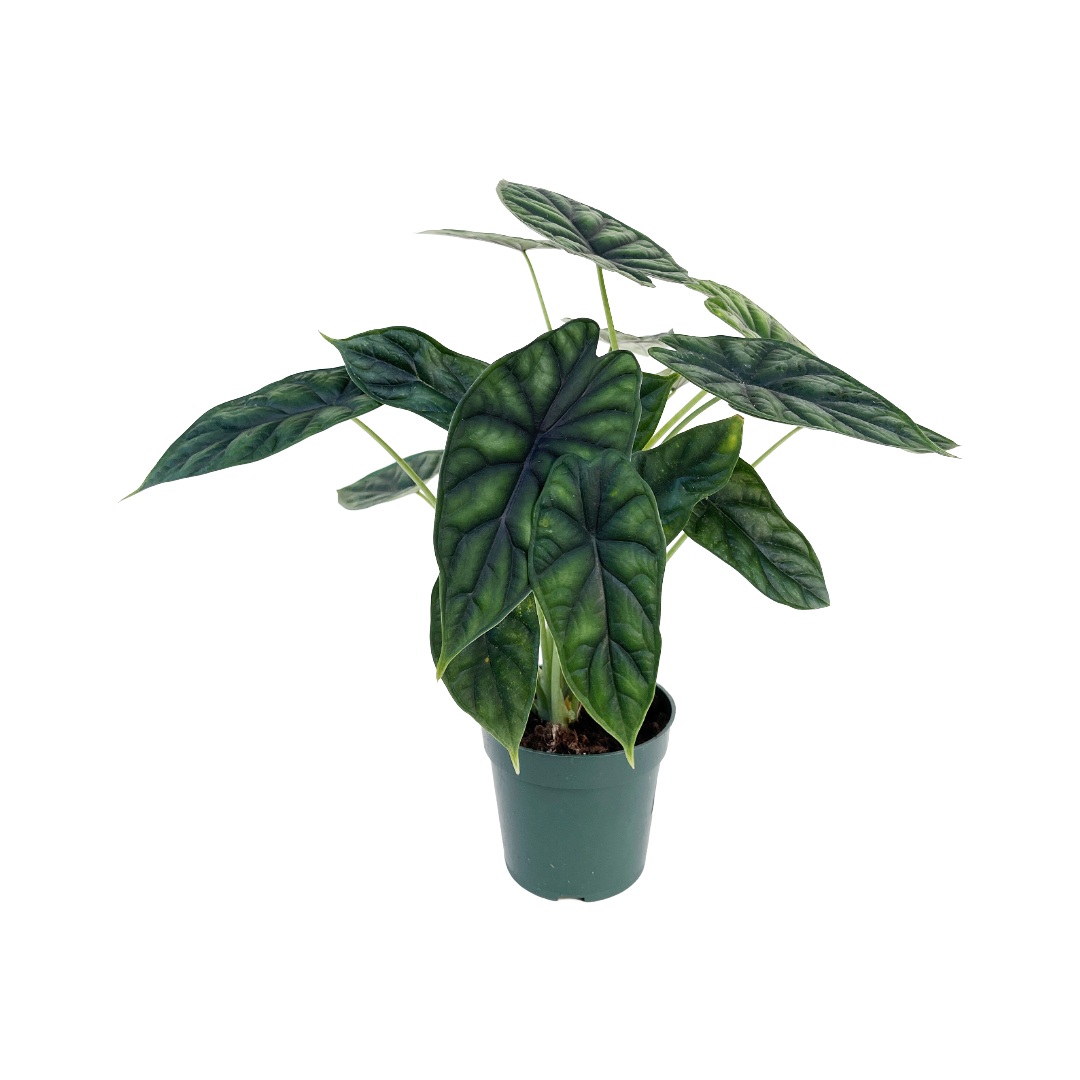
Alocasia baginda 'Dragon Scale'
Best statement piece for experienced indoor gardeners seeking exotic tropical foliage.

Elevate your indoor jungle with the Alocasia baginda 'Dragon Scale', a striking tropical plant native to Borneo. Its uniquely textured, deep-ridged leaves shimmer with a metallic sheen, evoking the scales of a mythical dragon. This foliage plant thrives in bright, indirect light, which is crucial for maintaining its vibrant appearance. Keep its well-draining soil consistently moist but not waterlogged. While visually captivating, please note this plant is toxic to pets and requires careful placement.
$28.00
Owner Satisfaction
4.6
/ 5
Category Rank
3542
/ 9578
#3542 in Potted Houseplants
Price vs Category Average
-46%
Below average
Pot Size
4
/ inches
Who it's for
- Interior stylists seeking a dramatic, sculptural statement piece
- Apartment dwellers with limited shelf or desk space
- Design enthusiasts drawn to high-contrast, metallic textures
Who should skip it
- Casual plant owners unable to maintain high-humidity environments
- Busy hobbyists who prefer low-maintenance, pest-resistant greenery
- Beginners struggling with precise watering and temperature control
Performance breakdown
Visual Impact
Textured, metallic foliage creates an unmatched architectural centerpiece for any room.
Care Difficulty
Intermediate requirements demand consistent attention to humidity and moisture levels.
Light Adaptability
Strictly requires bright, indirect light to maintain its signature vibrant sheen.
Pet Compatibility
Contains calcium oxalate crystals, making it hazardous for curious household pets.
Growth Potential
Thrives in controlled indoor environments when provided with proper tropical conditions.
Maintenance Effort
Regular monitoring of soil moisture is essential for long-term plant health.
Key Specs
Pot Size
4 inches
Minimum Temperature Tolerance
60°F (16°C)
Toxins Identified
calcium oxalate crystals
Light Requirement
Bright Indirect Light
Humidity Requirements
Moderate to High
Soil Type
Well-draining potting mix
USDA Hardiness Zone
10-11 (typically grown indoors)
Fertilizer Recommendation
Balanced fertilizer every 4 weeks during growing season
Features
- Unique 'Dragon Scale' textured foliage
- Exotic, architectural plant for interiors
- Requires bright, indirect light
- Needs consistent soil moisture
- Intermediate care level
- Toxic to pets
- Brings a tropical ambiance
- Visually stunning appearance
What customers say
Reviewers consistently highlight the exceptional quality and robust health of the Alocasia Dragon Scale upon delivery. The plant's striking aesthetic, driven by its unique textured foliage, is a major point of praise. Customers appreciate the secure and thoughtful packaging, which reliably protects the delicate leaves during transit. This commitment to careful handling, combined with the plant's impressive visual design, confirms its strong value for collectors.
Know before you buy
This plant requires bright, indirect light to maintain its signature metallic sheen and deep-ridged texture. Avoid placing it in direct sun, which can scorch the leaves, or in low-light corners, which may cause the plant to lose its vibrant appearance.
Keep the soil consistently moist but never waterlogged. Check the top inch of soil; if it feels dry to the touch, it is time to water, but ensure the pot has excellent drainage to prevent root rot.
No, the Alocasia 'Dragon Scale' is toxic to pets if ingested because it contains calcium oxalate crystals. We recommend placing it on a high shelf or in a room that your cats or dogs cannot access.
Yes, this species prefers moderate to high humidity levels to mimic its native tropical environment. If your home is particularly dry, consider using a humidifier or placing the plant on a pebble tray to keep the foliage healthy.
The 'Dragon Scale' is sensitive to cold and should be kept in temperatures above 60°F (16°C). Avoid placing it near drafty windows, air conditioning vents, or heaters, as sudden temperature fluctuations can stress the plant.
Apply a balanced fertilizer once every four weeks during the active growing season, typically spring through summer. Do not fertilize during the winter months when the plant's growth naturally slows down.

Still have a question?
Ask Hayley anything about this product before you decide.
Ready to buy?
$28