

 Radial Engineering
Radial Reamp JCR Studio Reamper
Best tool for producers looking to experiment with guitar amp tones.

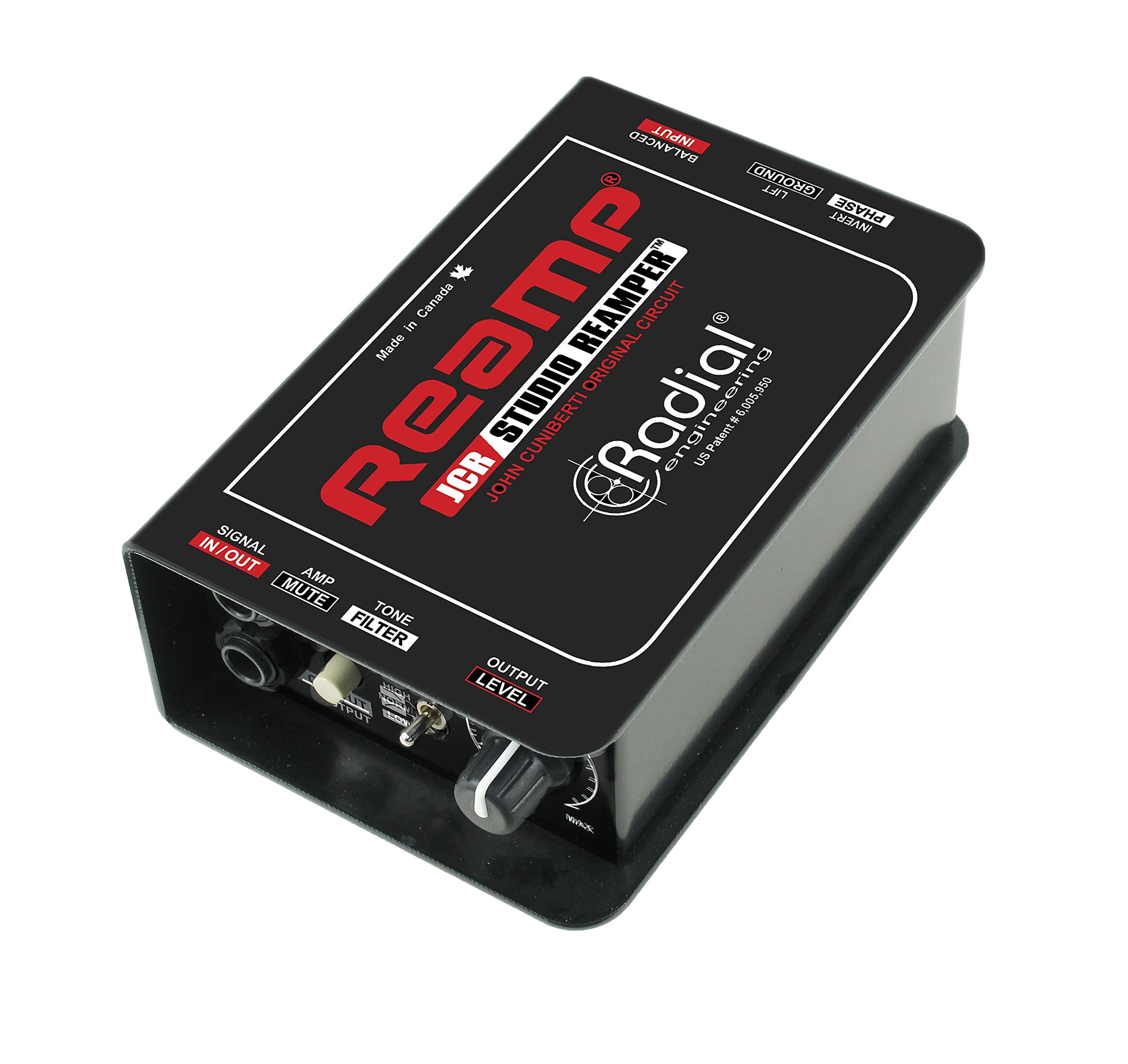
Unlock new sonic dimensions with the Radial Reamp JCR Studio Reamper. This passive re-amping device, based on John Cuniberti's original design, allows you to interface studio line-level outputs with guitar amps and stomp boxes. Effortlessly re-amp recorded tracks, opening up infinite possibilities for creative sound shaping long after the initial recording. Its custom transformer ensures authentic tone transfer, while the variable output control provides precise level matching. Built with a durable steel enclosure, the Reamp JCR is designed for reliable performance in any studio environment.
$330.43
Owner Satisfaction
4.8
/ 5
Category Rank
12
/ 67
#12 in Direct Boxes
Price vs Category Average
+25%
Above average
Type
Passive re-amping device
/ Passive re-amping device
Who it's for
- Engineers needing precise control over amp signal matching
- Touring professionals requiring road-ready, durable studio gear
- Audiophiles demanding pure, uncolored signal reproduction
Who should skip it
- Minimalists wanting to avoid extra power cables and clutter
- Users looking for versatile, multi-purpose signal routing tools
- Budget-conscious hobbyists seeking affordable reamping solutions
Performance breakdown
Signal Integrity
Custom transformer preserves the nuance and character of your original recording.
Build Durability
Rugged steel enclosure stands up to years of heavy studio use.
Tone Shaping
Three-way filter switch offers essential control over high and low frequencies.
Ease of Integration
Passive design eliminates power supply clutter for a seamless signal chain.
Level Matching
Variable output control makes balancing line-level signals to pedals effortless.
Design Authenticity
Faithful to the original John Cuniberti circuit for classic sonic results.
Key Specs
Type
Passive re-amping device
Design
John Cuniberti Original
Construction Material
Steel
Transformer Isolated
Yes
Output Connector Type
XLR
Form Factor
Desktop
DI Box Type
Passive
Channel Count
1
Features
- Re-amp recorded tracks for creative sound shaping
- Interface studio gear with guitar amps/pedals
- Custom transformer for authentic tone
- Variable output for level matching
- Durable steel construction
- Passive design, no power needed
- 3-way filter switch for tone control
- Phase inverter for signal manipulation
What customers say
Customers consistently praise the Radial JCR Reamper for its exceptional build quality and rock solid reliability. Users frequently note how simple it is to integrate into complex studio setups, making the reamping process straightforward and repeatable. The unit is often described as a necessary studio tool that delivers pristine signal integrity without introducing noise or coloration. While it represents a significant investment, professionals view it as an essential, long term piece of gear that simply works every time.
Know before you buy
No, the JCR is a completely passive device. It does not require batteries or an external power supply to function.
The JCR allows you to take a clean, dry signal you have already recorded in your DAW and send it back out through real guitar amplifiers or effects pedals. This lets you experiment with different tones and mic placements long after the original performance.
Studio line-level signals are much hotter than what a guitar amp expects. The JCR features a variable output control that lets you precisely attenuate the signal to match the input sensitivity of your amplifier or stompbox, preventing unwanted distortion.
The filter switch helps you manage the frequency response of your re-amped signal. It allows you to roll off high-end frequencies or adjust the tone to better suit the specific amplifier or pedal chain you are using.
The JCR uses a high-quality custom transformer that provides excellent isolation. This helps eliminate ground loops, which are a common source of hum and buzz when connecting studio equipment to guitar amplifiers.
No, the JCR is designed for re-amping, which moves signal from your interface to an amp. To record a guitar into your interface, you would need a standard Direct Box (DI) instead.

Still have a question?
Ask Hayley anything about this product before you decide.