

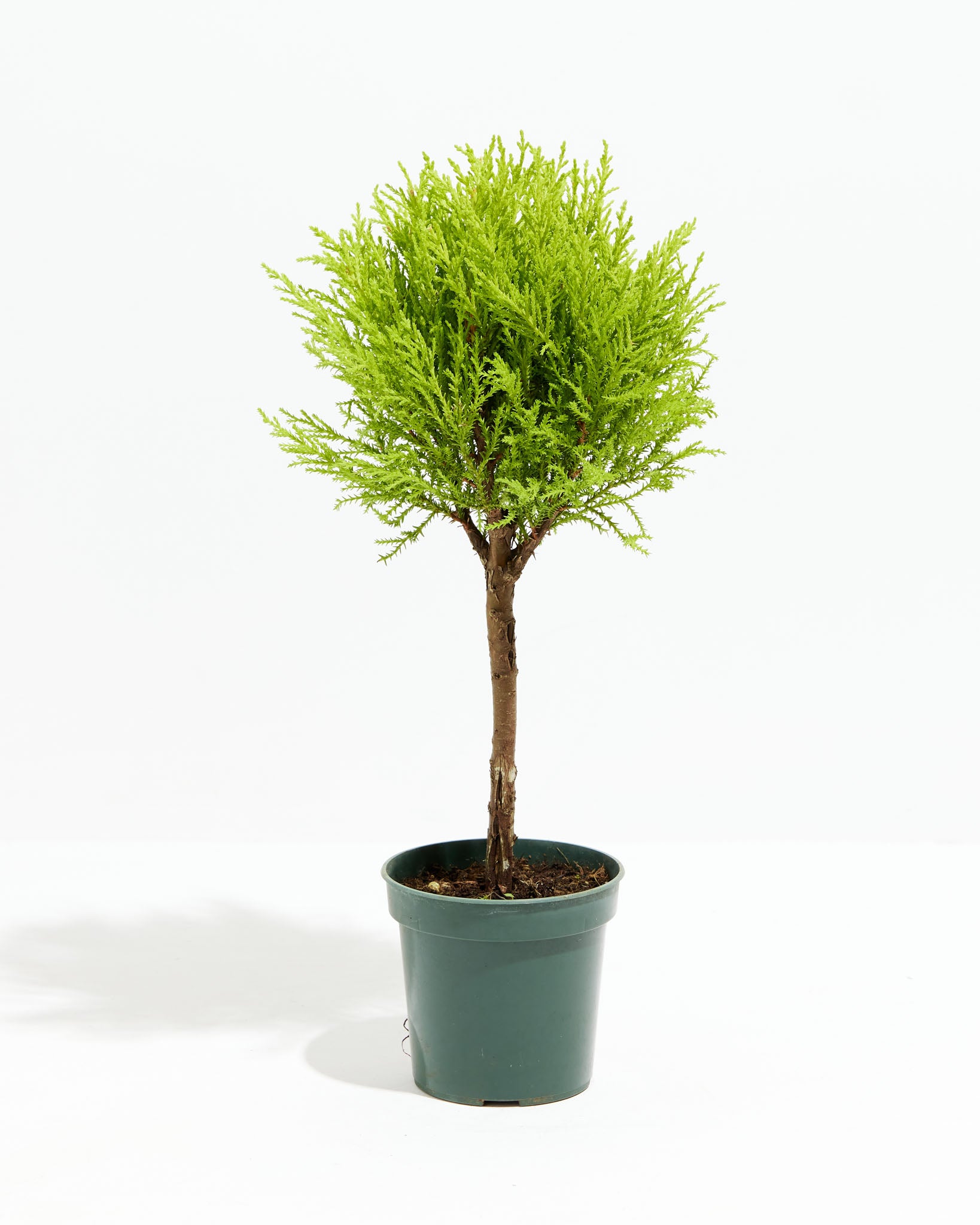
Lemon Cypress Topiary
Best aromatic accent for intermediate indoor gardeners seeking Mediterranean style.

Infuse your home with Mediterranean charm using the Lemon Cypress Topiary. This conifer, scientifically known as Cupressus macrocarpa, is perfectly sized for indoor gardening, reaching up to 3 feet tall with its signature green-yellow foliage and attractive conical shape. It's renowned for releasing a fresh, uplifting citrus scent, making any space feel more vibrant. This plant thrives with bright, direct indoor light and consistent moisture, requiring care to allow the topsoil to dry slightly between waterings. It prefers high humidity and cooler winter temperatures, making it an engaging plant for intermediate plant enthusiasts.
$43.00
Owner Satisfaction
4.6
/ 5
Category Rank
3536
/ 9472
#3536 in Potted Houseplants
Price vs Category Average
-18%
Below average
Mature Height
3
/ Up to feet
Who it's for
- Homeowners seeking a natural, mood-boosting sensory experience
- Interior stylists wanting an elegant, structured focal point
- Decorators needing consistent, vibrant color in every season
Who should skip it
- Busy plant owners who struggle with frequent watering schedules
- Apartment dwellers lacking access to bright, direct sunlight
- Casual gardeners wanting a low-maintenance, pest-free experience
Performance breakdown
Aromatic Appeal
The signature citrus scent provides an immediate, refreshing sensory upgrade.
Visual Impact
The classic conical form offers a sophisticated, sculptural aesthetic for interiors.
Maintenance Demand
High humidity and light requirements necessitate a dedicated, attentive care routine.
Growth Potential
Steady medium growth ensures the plant maintains its shape without overgrowing.
Pet Compatibility
Toxic properties make this a poor choice for households with curious pets.
Skill Requirement
Intermediate care needs demand a solid grasp of indoor plant fundamentals.
Key Specs
Mature Height
Up to 3 feet
USDA Hardiness Zones
7-10 (Outdoors)
Recommended Indoor Temperature
Low 60's°F in winter
Repotting Interval
Every 2 years in spring
Soil Requirement
Well-draining potting mix
Fertilizer Schedule
Monthly during growing season (liquid indoor)
Propagation Methods
Cuttings
Care Level
Intermediate
Features
- Ideal conical shape for decorative display
- Releases a fresh citrus scent
- Suitable for year-round indoor cultivation
- Attractive green-yellow foliage
- Enhances indoor air quality
- Requires bright direct light
- Prefers high humidity
- Established plant for immediate enjoyment
What customers say
Customers consistently praise the Lemon Cypress Topiary for its exceptional aesthetic appeal and vibrant quality upon arrival. The striking chartreuse color and perfectly sculpted design make it a highly desirable decorative piece, often exceeding expectations for size and health. Reviewers frequently highlight the careful packaging, noting that the plant arrives intact and stress free, which significantly boosts confidence in the brand's commitment to quality. While the price point is considered premium, the immediate visual impact and robust health of the plant justify the investment, making it a beloved addition to indoor spaces.
Know before you buy
Yes, the foliage releases a distinct, fresh citrus scent when brushed against or handled. It is a natural aromatic quality of the plant that helps freshen the air in your home.
No, the Lemon Cypress is not pet-safe. It is best to keep this plant in a room or on a surface that is inaccessible to curious pets.
This topiary requires bright, direct light to maintain its shape and vibrant color. A south-facing window is usually the best location to ensure it receives the intensity it needs.
You can increase humidity by placing the plant on a pebble tray filled with water, grouping it with other houseplants, or using a humidifier nearby. Misting alone is often insufficient for this species.
Keep the soil consistently moist but not waterlogged. Allow the top inch of soil to dry out slightly between waterings to prevent root rot, and ensure your pot has proper drainage.
Yes, you can move it outdoors during warmer months, provided it is acclimated to the sun gradually. Just be sure to bring it back inside before temperatures drop, as it prefers cooler indoor conditions during the winter.

Still have a question?
Ask Hayley anything about this product before you decide.
Ready to buy?
$43