

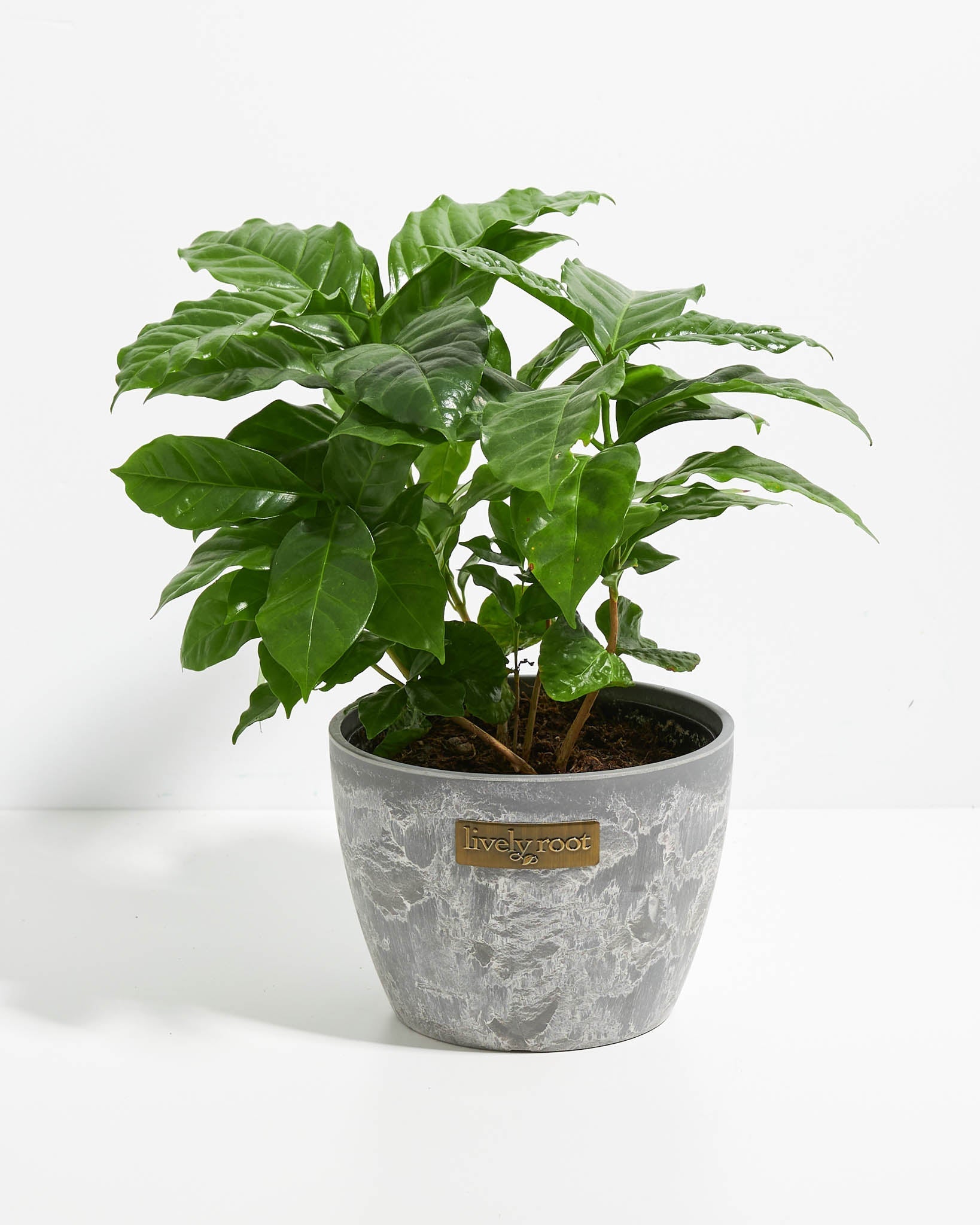
Coffee Plant
Best decorative greenery for plant lovers seeking a focus-boosting home aesthetic.

The Coffee Plant (Coffea arabica) is a striking houseplant featuring attractive, glossy, dark green leaves that grow up to five inches long. It produces delicate, star-shaped white flowers that may eventually yield coffee berries, though harvesting is unlikely for several years. This plant thrives indoors when given bright, indirect light and high humidity, ideally above 50%. It symbolizes focus and vigor, and acts as an excellent air purifier for your home environment. Note that this variety is toxic to both cats and dogs.
$43.00
Owner Satisfaction
4.6
/ 5
Category Rank
3617
/ 10298
#3617 in Potted Houseplants
Price vs Category Average
-18%
Below average
Scientific Name
Coffea arabica
/ Coffea arabica
Who it's for
- Interior decorators seeking a sophisticated, lush tropical aesthetic
- Patient gardeners desiring a unique, rewarding botanical harvest
- Wellness-focused homeowners wanting improved air quality and greenery
Who should skip it
- Residents in dry climates without supplemental humidity solutions
- Owners with limited access to bright, indirect lighting
- Busy plant parents unable to perform regular pest monitoring
Performance breakdown
Aesthetic Appeal
Glossy, deep green foliage creates a sophisticated, high-impact visual statement.
Air Purification
Effective at filtering indoor toxins while adding natural, vibrant life.
Humidity Sensitivity
Demands consistent moisture levels to prevent unsightly leaf browning.
Growth Potential
Long-term commitment required to see any actual coffee berry production.
Pet Safety
Toxic profile necessitates careful placement away from curious household pets.
Maintenance Effort
Requires diligent biweekly fertilizing and precise environmental control to thrive.
Key Specs
Scientific Name
Coffea arabica
Hardiness Zones
9, 10, 11 (Not frost-tolerant)
Ideal Temperature Range
65–80°F
Soil Requirement
Well-draining indoor potting mix with perlite
Repotting Interval
Yearly, using a pot 2 inches larger
Fertilizing Frequency
Biweekly during growing period
Features
- Improves indoor air quality as an air-purifying plant
- Produces fragrant, star-shaped white flowers
- Symbolizes focus, vigor, and willpower
- Glossy, dark green foliage provides high aesthetic value
- Can potentially produce coffee beans after several years
- Requires high humidity levels (50%+) to prevent leaf browning
What customers say
Consumers are overwhelmingly impressed by the superior quality and robust health of the Coffee Plant upon delivery. The careful, secure packaging is a consistent point of praise, ensuring the plant arrives vibrant and undamaged. This focus on initial quality and the plant's attractive, lush design establishes strong customer confidence and justifies the perceived value, making it a highly recommended purchase for indoor greenery enthusiasts.
Know before you buy
While the plant can produce coffee berries, it is primarily grown as an ornamental houseplant. It typically takes several years for a mature plant to flower and fruit, and home conditions rarely provide the specific environment needed for a harvestable yield.
To keep humidity above 50%, you can place the plant on a pebble tray filled with water, group it with other houseplants to create a microclimate, or use a humidifier nearby. Misting the leaves occasionally can also help, but it is not a substitute for consistent ambient humidity.
No, the Coffee Plant is toxic to both cats and dogs. It is best to keep this plant in a room or on a high shelf that is inaccessible to your pets.
The Coffee Plant thrives in bright, indirect light. Avoid placing it in direct, harsh sunlight, which can scorch the glossy leaves, or in low-light corners, which will stunt its growth.
You should plan to repot your plant once a year. When repotting, choose a container that is approximately two inches larger in diameter than the current pot and use a well-draining potting mix amended with perlite.
Apply a balanced liquid fertilizer biweekly during the active growing season, which typically spans spring through summer. Cease fertilization during the winter months when the plant's growth naturally slows down.

Still have a question?
Ask Hayley anything about this product before you decide.