

 High Country Gardens
Western Sunflower
Best native perennial for naturalizing meadows and stabilizing poor soil.

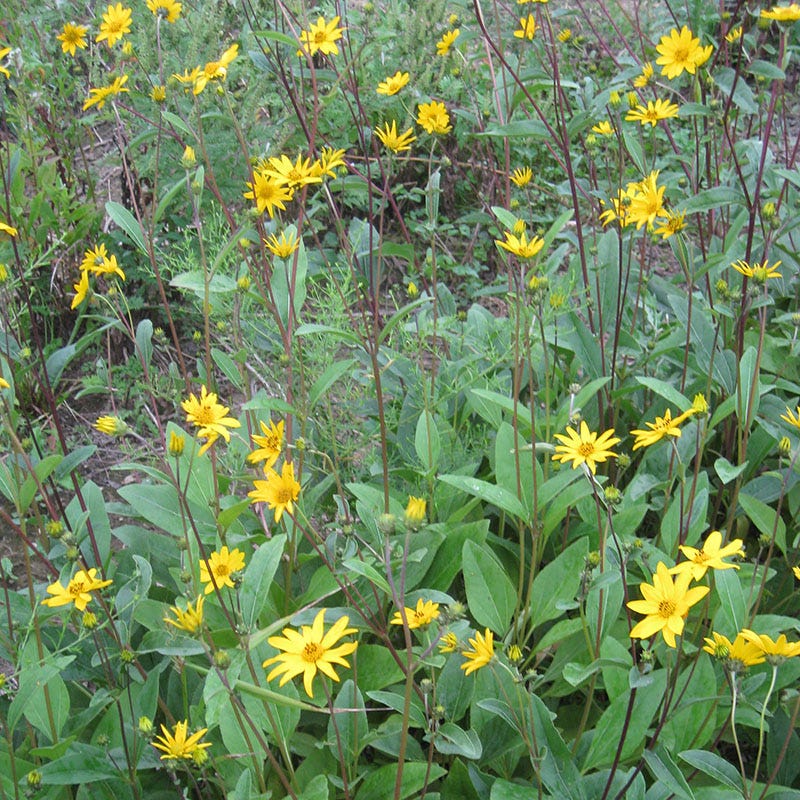
The Western Sunflower, Helianthus occidentalis, is a compact, native perennial that produces abundant yellow-orange blooms for many weeks starting in late summer. This plant spreads via rhizomes, forming colonies, making it an excellent choice for stabilizing poor soil sites or integrating into meadow and prairie landscapes. It is highly beneficial for the ecosystem, attracting numerous insect pollinators and later providing seeds for songbirds. Reaching 3 to 4 feet in height, this low-maintenance wildflower thrives in various soil types and is often paired with other native species for a natural garden look.
$13.99
Owner Satisfaction
4.6
/ 5
Category Rank
864
/ 3268
#864 in Landscaping & Garden Plants
Price vs Category Average
-49%
Below average
Life Cycle
Perennial
/ Perennial
Who it's for
- Landscape designers wanting structured, upright plants for perennial borders
- Eco-conscious gardeners supporting local bee and butterfly populations
- Xeriscaping enthusiasts seeking low-maintenance, drought-resilient plant options
Who should skip it
- Impatient gardeners looking for immediate, full-sized landscape impact
- Gardeners managing heavy clay or poorly draining soil conditions
- Homeowners prioritizing long-lasting, season-long floral displays
Performance breakdown
Pollinator Support
A powerhouse for bees and butterflies throughout the late summer season.
Maintenance Effort
Thrives with minimal intervention once established in the landscape.
Erosion Control
Rhizomatous growth habit effectively stabilizes slopes and poor soil sites.
Wildlife Resistance
Reliably deters deer and rabbits from grazing on your garden beds.
Drought Tolerance
Xeric nature makes it an ideal choice for water-wise gardening.
Naturalizing Potential
Spreads steadily to create beautiful, self-sustaining meadow colonies.
Key Specs
Life Cycle
Perennial
Watering Needs
Low
Flower Species
Sunflower
Light Requirement
Full Sun
Bloom Season
Summer, Fall
Fragrance Level
No Fragrance
Pet Safe
False
Growth Habit
Mounding
Features
- Compact native perennial growth habit
- Long blooming period in late summer
- Attracts pollinators and songbirds
- Forms colonies, ideal for naturalizing
- Deer and rabbit resistant
- Low-maintenance wildflower
- Erosion control for slopes
- Neonicotinoid-free
What customers say
Customers consistently praise the Western Sunflower for its exceptional quality and reliability. Reviewers frequently note how robust and healthy the plants arrive, establishing quickly even in challenging conditions. The primary delight centers on the plant's hardiness and its ability to produce vibrant, long lasting blooms year after year, confirming its status as a dependable, low maintenance garden staple. This sunflower delivers on its promise of visual impact and enduring performance.
Know before you buy
This plant spreads through underground rhizomes, which allows it to form colonies over time. This makes it an excellent choice for naturalizing areas or filling in meadow spaces, though you should provide enough room for it to expand.
Yes, its ability to form colonies makes it highly effective for stabilizing soil on slopes or in areas with poor soil quality. Its root system helps hold the earth in place while providing a low-maintenance ground cover.
Once established, the Western Sunflower is quite xeric and drought-tolerant. It prefers well-drained, sandy soil and will thrive with minimal watering, making it a practical choice for water-wise landscapes.
This variety is considered deer and rabbit resistant, meaning it is less likely to be targeted by local wildlife compared to more palatable garden perennials. However, no plant is entirely immune if local food sources are scarce.
No, the Western Sunflower is not considered pet-safe. If you have cats or dogs that frequently graze on garden plants, you may want to place this sunflower in a section of the yard they do not access.
The Western Sunflower is a magnet for bees and butterflies during its long late-summer bloom period. Once the flowers fade, the seeds provide a valuable food source for songbirds throughout the autumn.

Still have a question?
Ask Hayley anything about this product before you decide.
Ready to buy?
$14