

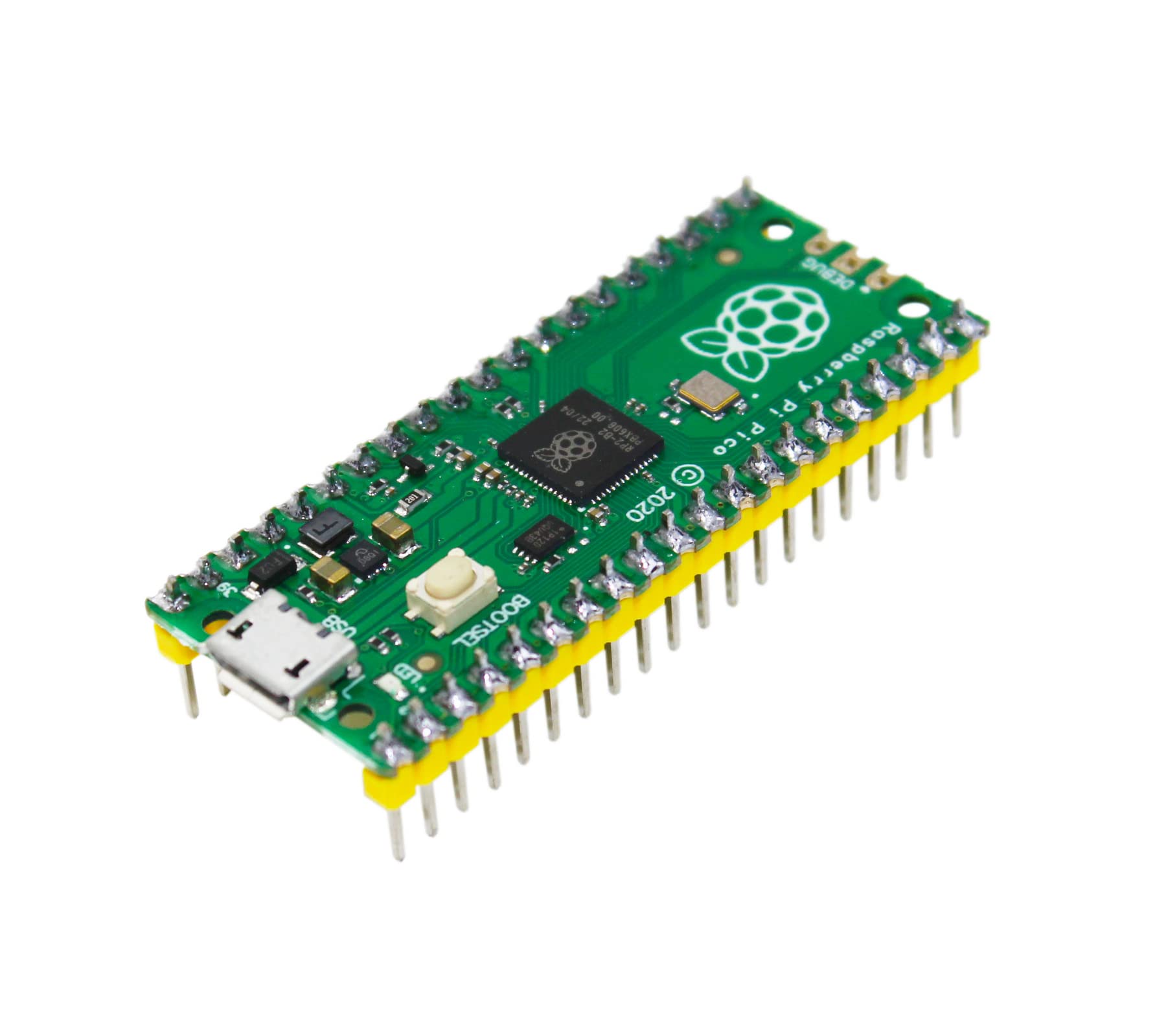
Digishuo 2Pcs Raspberry Pi Pico Microcontroller Board
Best dual-pack for hobbyists learning embedded programming and hardware prototyping.

This package includes two Digishuo Raspberry Pi Pico microcontroller boards, each featuring the RP2040 chip designed by Raspberry Pi. These boards are built for flexibility and performance, boasting a dual-core Arm Cortex M0+ processor capable of running up to 133 MHz. With 264KB of SRAM and 2MB of onboard flash memory, they offer ample space for your projects. The Pico provides 26 multi-function GPIO pins, supporting various interfaces like SPI, I2C, and UART, along with 16 PWM channels and 3 ADC inputs. Development is streamlined with C/C++ SDK and MicroPython support, complete with extensive resources for easy integration.
$25.79
Owner Satisfaction
4.6
/ 5
Category Rank
407
/ 1545
#407 in Development Boards
Price vs Category Average
-71%
Below average
Who it's for
- Hobbyists building multiple projects on a budget
- Developers needing high performance for complex sensor integration
- Learners and experts seeking flexible programming language options
Who should skip it
- Makers requiring wireless connectivity for smart home projects
- Beginners lacking soldering tools or experience
- Users preferring the convenience of modern USB-C connectivity
Performance breakdown
Processing Power
Dual-core architecture handles complex tasks with impressive speed and efficiency.
I/O Versatility
Extensive GPIO options provide exceptional flexibility for diverse hardware projects.
Programming Accessibility
Drag-and-drop interface makes deployment seamless for beginners and experts alike.
Memory Capacity
Onboard flash memory is sufficient for most embedded applications and scripts.
Power Efficiency
Optimized for battery-powered designs with robust low-power sleep modes.
Developer Ecosystem
Extensive documentation and community support ensure rapid project troubleshooting.
Key Specs
RP2040 microcontroller chip designed by Raspberry Pi
Dual-core Arm Cortex M0+ processor, flexible clock running up to 133 MHz
264KB of SRAM, and 2MB of onboard Flash memory
Castellated module allows soldering direct to carrier boards
USB 1.1 with device and host support
Low-power sleep and dormant modes
26 Multi-function GPIO pins
2 SPI, 2 I2C, 2 UART, 3 12-Bit ADC, 16 Controllable PWM channels
Features
- Low-cost, high-performance microcontroller board
- Flexible digital interfaces
- Drag-and-drop programming using mass storage over USB
- Accurate clock and timer on-chip
- Accelerated floating-point libraries
- 8 Programmable I/O (PIO) state machines for custom peripheral support
- Complete development resources and tutorials available
- Suitable for battery-powered and low-energy applications
What customers say
Customers appreciate the Digishuo Raspberry Pi Pico for its exceptional value and straightforward setup. This two pack offers a cost effective solution for hobbyists and developers alike. The boards are frequently praised for their reliable performance in various DIY electronics projects. Users find the documentation accessible and the hardware integration seamless. The compact design and versatile pinout make it a favorite for those seeking a balance between power and simplicity. Overall the sentiment reflects high satisfaction with the product utility and affordability.
Know before you buy
The Pico is highly versatile, supporting both C/C++ via the official SDK and MicroPython. This makes it accessible for both beginners looking to learn scripting and advanced developers needing low-level control.
Programming is straightforward thanks to the drag-and-drop interface. When connected via USB, the board appears as a mass storage device, allowing you to simply drag your compiled file onto the drive to flash it.
Yes, the RP2040 chip is designed with efficiency in mind, featuring dedicated low-power sleep and dormant modes. This makes it an excellent choice for portable or remote projects that need to run on battery power for extended periods.
The PIO blocks allow you to create custom hardware interfaces that aren't natively supported by the chip. This gives you the flexibility to communicate with unique sensors or displays that require specific timing protocols.
The board features a castellated module design, which allows it to be soldered directly onto carrier boards or used with header pins on a standard breadboard. You will need to solder headers onto the board first if you intend to use it with a solderless breadboard.
Yes, the Pico is well-equipped for connectivity. It includes two SPI, two I2C, and two UART interfaces, providing plenty of options for connecting to a wide variety of external sensors, modules, and peripherals.

Still have a question?
Ask Hayley anything about this product before you decide.