

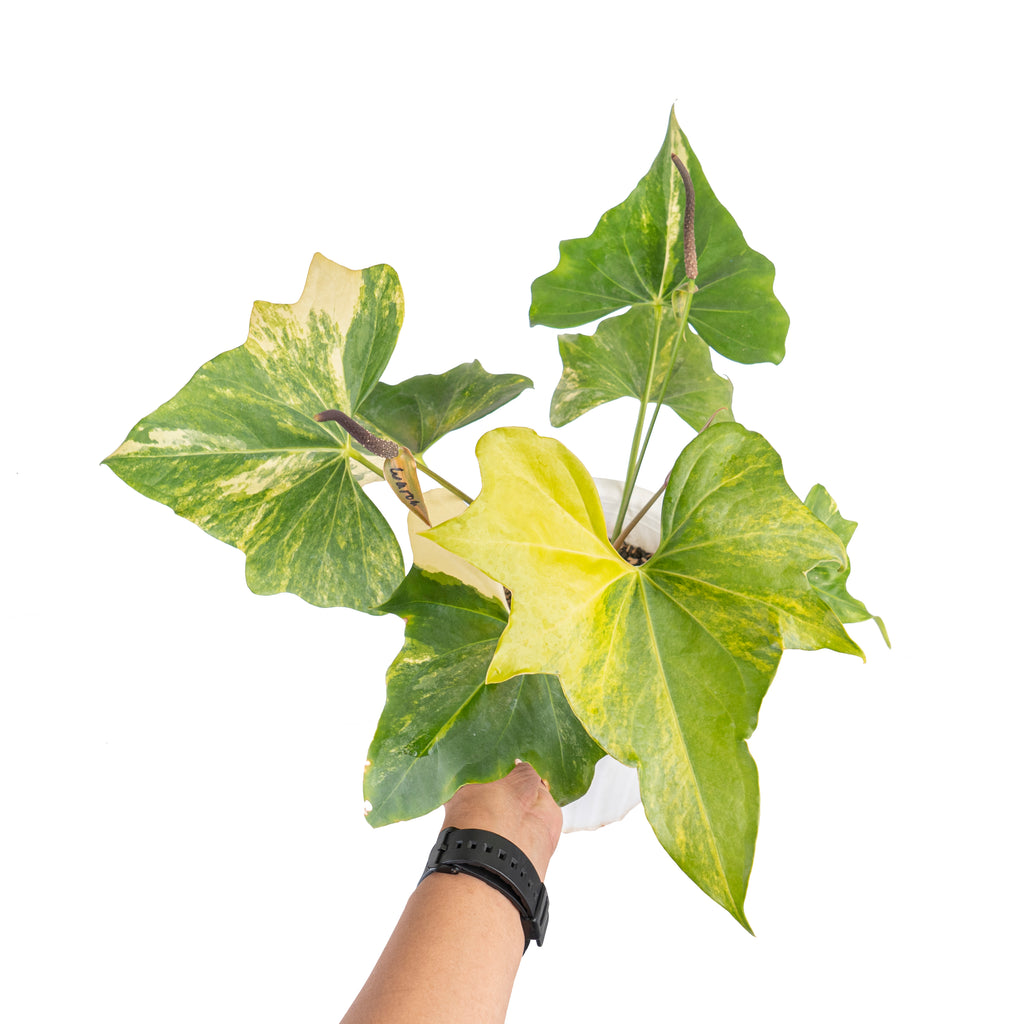
Anthurium pterodactyl variegated
Best statement piece for experienced indoor plant collectors.

The Anthurium pterodactyl variegated is a striking plant known for its unique, deeply lobed leaves that resemble a pterodactyl's wings, enhanced by beautiful variegation. This mature-sized specimen thrives in bright, indirect light and prefers its soil to be kept lightly moist but not waterlogged. It requires high humidity, ideally above 70%, and a temperature range of 68–82°F. While generally considered toxic to pets and humans, its exotic appearance makes it a prized addition to any indoor plant collection for experienced growers.
$247.00
Owner Satisfaction
4.5
/ 5
Category Rank
6205
/ 10395
#6205 in Potted Houseplants
Price vs Category Average
+374%
Above average
Light
7
/ Bright, indirect light (avoid harsh direct sun for the first days)
Who it's for
- Interior designers seeking a dramatic, high-impact botanical statement piece
- Dedicated hobbyists looking to elevate their rare plant collection
- Serious investors interested in high-value, limited-supply botanical assets
Who should skip it
- Budget-conscious buyers looking for affordable indoor greenery
- Casual plant owners unable to maintain precise, high-humidity environments
- Impulse shoppers wanting immediate access to readily available houseplants
Performance breakdown
Visual Impact
The dramatic, wing-like foliage creates an instant, high-end focal point.
Care Difficulty
Demanding humidity and light needs require a seasoned green thumb.
Variegation Quality
Striking patterns provide a unique aesthetic appeal for serious collectors.
Maturity Level
Full-sized specimen offers immediate gratification without the long wait.
Environmental Sensitivity
Strict temperature and humidity ranges leave little room for error.
Growth Potential
Responds well to consistent care with impressive, structural leaf development.
Key Specs
Light
Bright, indirect light (avoid harsh direct sun for the first 7 days)
Water
Keep medium lightly moist, not soggy. Water only when the top layer starts to dry.
Humidity
Preferably 70%+
Temperature
Ideal 68–82°F. Avoid below 60°F (risk increases under 55°F).
Features
- Unique pterodactyl-shaped leaves with attractive variegation
- Mature size plant for immediate impact
- Requires high humidity for optimal growth
- Thrives in bright, indirect light conditions
- Ideal for intermediate plant care enthusiasts
- Variegated foliage
- Mature size
- High humidity requirement
- Bright indirect light
What customers say
Customers consistently praise the exceptional quality of the Anthurium pterodactyl variegated from Aroid Market. Many highlight the plant's robust health upon arrival and the stunning, distinct variegation patterns, often exceeding expectations. Enthusiasts appreciate receiving a well established specimen, reflecting excellent care. The perceived value is high, as buyers feel they are investing in a rare and beautiful plant that is accurately represented and arrives in pristine condition, making it a prized addition to their collection.
Know before you buy
This plant thrives in bright, indirect light. While it needs plenty of light to support its variegated foliage, you should avoid harsh, direct sun, which can scorch the leaves.
The Anthurium pterodactyl is best suited for intermediate growers. It has specific requirements regarding humidity and soil moisture that require consistent monitoring to keep the plant healthy.
To reach the ideal humidity levels, you may need to place the plant in a greenhouse cabinet or use a dedicated humidifier nearby. Misting is generally insufficient for maintaining the high, consistent humidity this species demands.
Water only when the top layer of the soil begins to dry out. The goal is to keep the medium lightly moist, but never soggy, as the roots are sensitive to waterlogged conditions.
No, this plant is toxic to both humans and pets if ingested. It is best kept in a location that is inaccessible to curious animals or small children.
Keep the plant in a room between 68°F and 82°F. It is important to avoid temperatures below 60°F, as the plant faces a significant risk of cold stress if it drops below 55°F.

Still have a question?
Ask Hayley anything about this product before you decide.