

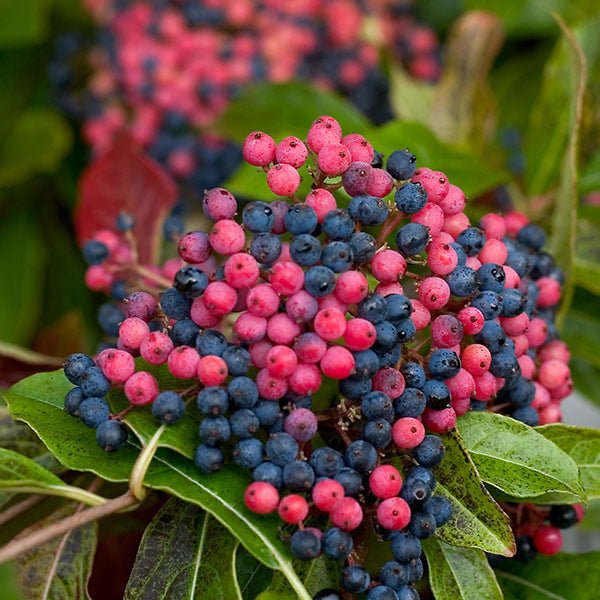
Brandywine Viburnum
Best low-maintenance shrub for gardeners wanting year-round wildlife and seasonal color.

The Brandywine™ Viburnum is a stunning deciduous shrub celebrated for its year-round visual appeal. It produces clusters of fragrant white flowers in late spring, followed by attractive berries that transition from green to pink and finally to dark blue in the fall. Its glossy leaves turn a striking mix of red, burgundy, and purple in autumn, offering spectacular fall color. This native shrub is also a magnet for birds, butterflies, and bees, making it an excellent choice for wildlife gardens. It thrives in moist, well-drained soil and full sun to partial shade, requiring minimal care.
$26.14
Owner Satisfaction
4.7
/ 5
Category Rank
34
/ 2452
#34 in Bushes & Shrubs
Price vs Category Average
-34%
Below average
Botanical Name
Viburnum nudum 'Bulk'
/ Viburnum nudum 'Bulk'
Who it's for
- Homeowners seeking vibrant seasonal color transformations
- Wildlife enthusiasts wanting year-round garden interest
- Busy gardeners needing low-maintenance landscape solutions
Who should skip it
- Gardeners with limited space for multiple shrub varieties
- Owners of heavily shaded landscape plots
- Residents living in areas with high deer populations
Performance breakdown
Seasonal Visual Impact
Multi-season interest provides constant color shifts from spring through late autumn.
Wildlife Support
A powerhouse for local pollinators and birds throughout the growing season.
Maintenance Requirements
Low-effort shrub that thrives with minimal intervention once established.
Landscape Versatility
Adapts easily to hedges, naturalized borders, or as a standalone specimen.
Berry Production
Self-pollinating nature ensures reliable fruit set without needing a second plant.
Environmental Adaptability
Juglone tolerance allows for successful planting near black walnut trees.
Key Specs
Botanical Name
Viburnum nudum 'Bulk'
Height
5-6 ft
Width
5-6 ft
Growing Zones
5-9
Sunlight
Full sun
Growth Rate
Moderate
Flower Color
White
Leaf Color
Green, Red, Purple
Features
- Breathtaking Fall Berry Display Bright Blue & Vivid Pink
- Fragrant White Flower Clusters & Showy, Glossy Leaves
- Incredible Dark Maroon Red Fall Color
- Native Shrub With Winter Interest
- Attracts Birds & Bees & Butterflies
- Suitable for Hedge, Naturalizing, Specimen, Wildlife & Winter Interest
- Self-Pollinating for good berry production
- Juglone Tolerant
What customers say
Customers consistently praise the Brandywine Viburnum for its exceptional quality and reliable performance. Many highlight its robust health upon arrival and its vigorous growth once planted, making it an easy addition to any garden. The plant's stunning fall foliage, transitioning to rich purples and reds, along with its abundant, long lasting berries, are frequently celebrated for adding significant visual appeal and seasonal interest. Gardeners appreciate its low maintenance nature and consistent beauty, affirming its reputation as a dependable and rewarding choice.
Know before you buy
No, the Brandywine Viburnum is self-pollinating. While planting more than one can sometimes increase fruit set, you will get a reliable display of berries with just a single shrub.
Since this shrub reaches a width of 5 to 6 feet, you should space them approximately 5 feet apart on center. This allows enough room for the plants to grow together into a cohesive hedge without overcrowding.
Yes, the Brandywine Viburnum is juglone tolerant. It is a great choice for landscapes where black walnut trees are present, as it can withstand the chemical compounds they release into the soil.
It is a low-maintenance plant that generally does not require regular pruning. If you need to shape it or remove dead wood, the best time to prune is immediately after it finishes flowering in late spring.
The Brandywine Viburnum is hardy in USDA zones 5 through 9. It is well-suited for a wide range of climates, provided it receives adequate moisture and is planted in well-drained soil.
The berries begin as green clusters in the summer. As fall approaches, they transition to a vivid pink before eventually maturing into a deep, dark blue.

Still have a question?
Ask Hayley anything about this product before you decide.