

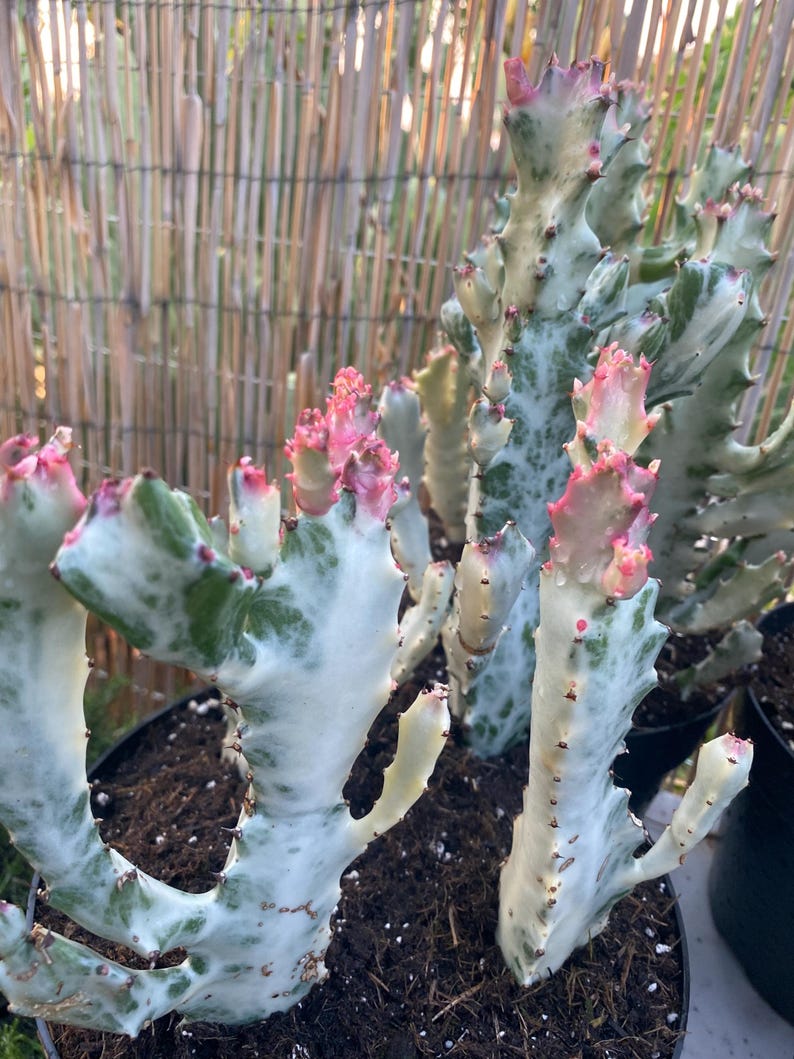
Euphorbia lactea variegata
Best vibrant succulent for enhancing indoor plant collections.

The Euphorbia lactea variegata, commonly known as White Ghost Cactus or Dragon Bones Cactus, is a striking succulent shrub originating from Tropical Asia. This cultivated form is prized for its unique, high-contrast marbling of pale white, mint, and gray-green on its candelabra-like stems, giving it an almost ghostly appearance. It thrives in bright light to full sun and requires very low watering once established, preferring its soil to dry out between waterings. While beautiful, it is sensitive to frost and its milky sap is toxic. This plant is well-suited for containers and architectural plantings, growing well indoors near a sunny window or outdoors in frost-free climates.
$48.95
Owner Satisfaction
4.6
/ 5
Category Rank
3338
/ 10298
#3338 in Potted Houseplants
Price vs Category Average
-6%
Below average
Latin Name
.
/ Euphorbia lactea f variegata
Who it's for
- Home decorators seeking unique, sculptural living accents
- Busy individuals or new plant parents desiring low-maintenance greenery
- Gardeners in dry climates or those prone to forgetting watering
Who should skip it
- Pet owners or families with young children needing safe plant options
- Apartment dwellers with limited access to bright, sunny windows
- Enthusiasts wanting fast-growing plants to quickly fill spaces
Performance breakdown
Visual Impact
The striking marbled foliage creates an unmatched architectural focal point.
Maintenance Ease
Drought-tolerant nature makes it ideal for low-effort indoor gardening.
Growth Rate
Slow development requires patience for the plant to reach maturity.
Environmental Adaptability
Thrives in bright light but remains strictly sensitive to cold temperatures.
Safety Profile
Toxic sap and sharp spines demand careful handling around pets.
Collector Appeal
Highly sought after for its unique ghostly aesthetic and variegation.
Key Specs
Latin Name
Euphorbia lactea f. variegata
Common Names
Variegated Candelabra Euphorbia, Mottled Spurge, White Ghost Cactus
Family
Euphorbiaceae
Category
Succulent Shrub
USDA Zones
10–11
Origin
Tropical Asia (Cultivated Form)
Height
3–6′
Width
2–4′
Features
- Unique Marbled Foliage
- Drought Tolerant
- Low Maintenance
- Striking Architectural Form
- Suitable for Indoor/Outdoor
- Collector's Item
What customers say
Customers consistently praise the exceptional quality of these plants, noting specimens arrive healthy and vibrant. Many reviews highlight the careful packaging, which ensures plants are well protected during transit, minimizing stress. The striking variegation and robust growth are frequently admired, exceeding expectations for visual appeal. Buyers appreciate receiving plants that are true to description, often larger and more impressive than anticipated. This consistent delivery of healthy, beautiful plants contributes significantly to high satisfaction.
Know before you buy
This plant thrives in bright, direct light to full sun. Placing it near a south-facing window is ideal to ensure it receives enough light to maintain its signature white and mint marbled patterns.
No, this plant is not pet-friendly. It contains a milky sap that is toxic if ingested or if it comes into contact with skin or eyes, so it should be kept in a location inaccessible to cats, dogs, and small children.
This is a drought-tolerant succulent that prefers its soil to dry out completely between waterings. In most indoor environments, watering once every few weeks is sufficient, especially during the winter months when growth slows.
You can only keep it outdoors year-round if you live in USDA zones 10–11, where temperatures remain above 35°F. Because it is frost-sensitive, it must be brought indoors or protected if temperatures drop near freezing.
The Euphorbia lactea variegata is a slow-growing shrub. While it can eventually reach up to 6 feet in height, it will maintain its manageable, architectural size for quite some time in a container.
It requires well-draining soil, such as a standard cactus or succulent potting mix, to prevent root rot. Fertilization is rarely needed, but you can apply a balanced, diluted succulent fertilizer once or twice during the active growing season in spring and summer.

Still have a question?
Ask Hayley anything about this product before you decide.