


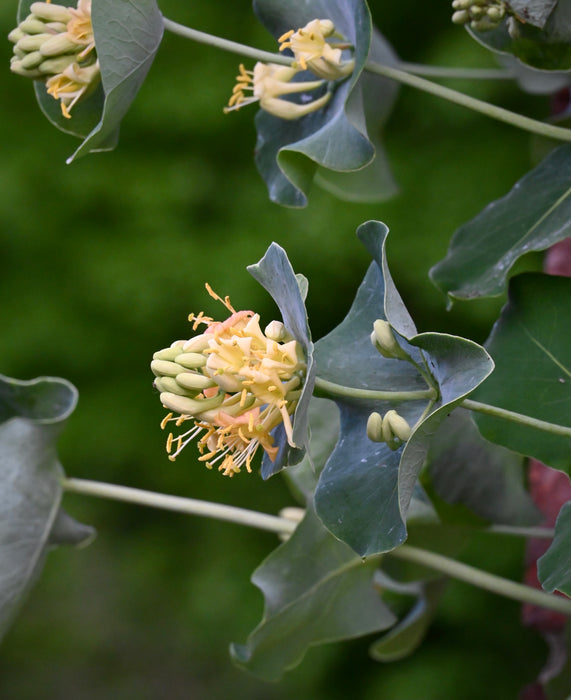
Yellow Twining Honeysuckle
Best vibrant climber for easy garden beautification.

This native vine is an excellent choice for trellises, offering a manageable size and sparse branches. It produces showy, tubular yellow flowers from May to June, followed by clusters of red berries in the summer. A magnet for wildlife, it attracts bees, flies, hummingbirds, and various moths, while its berries feed songbirds. The twisted vines also provide valuable nesting habitat. It thrives in full sun to part shade with moist, well-drained soil.
$39.99
Owner Satisfaction
4.7
/ 5
Category Rank
35
/ 4623
#35 in Landscaping & Garden Plants
Price vs Category Average
+38%
Above average
Light Exposure
Full Sun, Part Sun/Shade
/ Full Sun, Part Sun/Shade
Who it's for
- Gardeners aiming to support local wildlife and enhance biodiversity
- Busy homeowners desiring beautiful, resilient plants without constant upkeep
- Creative gardeners looking for adaptable plants to add vertical interest
Who should skip it
- Gardeners preferring low-maintenance plants or those with limited space
- Individuals desiring a completely pest-free garden experience
- Homeowners with predominantly shady yards or heavy, poorly draining soil
Performance breakdown
Pollinator Appeal
A high-traffic destination for hummingbirds, moths, and essential native bees.
Wildlife Support
Provides critical nesting cover and seasonal food sources for local songbirds.
Trellis Suitability
Manageable growth habit makes it ideal for vertical garden structures.
Maintenance Ease
Requires consistent moisture and lacks drought tolerance, demanding regular gardener attention.
Deer Resistance
Highly palatable to local deer populations, requiring protection in vulnerable areas.
Visual Impact
Striking yellow blooms and vibrant red berries offer multi-season garden interest.
Key Specs
Light Exposure
Full Sun, Part Sun/Shade
Soil Moisture
Wet Mesic, Mesic
Soil Type
Loam, Sandy Loam, Rocky Loam
Mature Height
Up to 15 feet
Bloom Color
Yellow
Bloom Time
May-June
Fruit
Clusters of berries mature to red in summer.
Root Type
Branching
Know before you buy
Yes, it is an excellent choice for trellises. It has a manageable size and sparse branching habit, meaning it won't overwhelm smaller structures or require constant, aggressive pruning.
Absolutely. It is a magnet for pollinators like bees, flies, and hummingbirds, and the red berries that appear in summer provide a valuable food source for local songbirds.
This honeysuckle prefers moist, well-drained soil. It thrives best in loamy, sandy, or rocky loam soil types that retain some moisture without becoming waterlogged.
No, this plant is not deer resistant. If you live in an area with a high deer population, you may need to use protective fencing or deterrents to keep them from browsing on the foliage.
It is quite versatile and can be planted in locations ranging from full sun to part shade. For the best bloom production, aim for a spot that receives a good balance of light.

Still have a question?
Ask Hayley anything about this product before you decide.
Ready to buy?
$40