

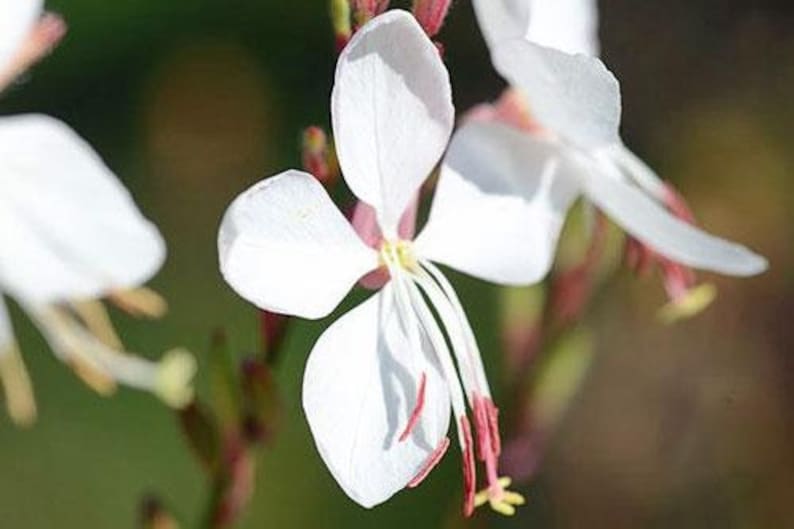
Oenothera lindheimeri | Lindheimers Beeblossom | White Gaura
Best delicate blooms for low maintenance garden enthusiasts.

Lindheimer's Beeblossom, also known as White Gaura, is a striking perennial plant native to North America. It features slender, arching stems with delicate, four-petaled white or pink-tinged flowers that resemble butterflies. These blossoms are highly attractive to pollinators like bees and butterflies and tend to open in the late afternoon or evening. Gaura lindheimeri thrives in well-drained soil and prefers full sun, making it suitable for xeriscape gardens and wildflower plantings. Its extended blooming period from late spring to fall and low-maintenance needs contribute to a natural and charming garden landscape. The seeds require light to germinate and prefer consistent soil temperatures between 70-75°F.
$9.00
Owner Satisfaction
4.5
/ 5
Category Rank
4803
/ 6505
#4803 in Seeds & Seed Tape
Price vs Category Average
-15%
Below average
Botanical Name
Oenothera lindheimeri
/ Oenothera lindheimeri
Who it's for
- Gardeners seeking vibrant, long-lasting floral interest and ecological benefits.
- Eco-conscious individuals and those desiring low-effort, hardy garden additions.
- Designers and homeowners aiming for a naturalistic, flowing garden style.
Who should skip it
- Gardeners who prefer contained growth and minimal weeding effort.
- Those who prefer plants requiring minimal structural maintenance.
- Planners expecting long-term perennial presence without replacement.
Performance breakdown
Pollinator Attraction
Butterfly-like blooms act as a magnet for local bees and pollinators.
Bloom Longevity
Extended flowering window provides consistent color from late spring through autumn.
Maintenance Ease
Low-effort perennial that thrives with minimal intervention once established.
Xeriscape Suitability
Excellent drought tolerance makes it a perfect fit for water-wise gardens.
Germination Complexity
Requires specific light exposure and consistent warmth for successful seedling emergence.
Landscape Versatility
Graceful stems work beautifully in containers or as naturalized meadow accents.
Key Specs
Botanical Name
Oenothera lindheimeri
Common Names
Lindheimer's Beeblossom, White Gaura
Plant Type
Perennial Flower
Sunlight Exposure
Full Sun
USDA Hardiness Zone
6-9
Mature Height
2-3 feet
Bloom Time
Late Spring to Fall
Flower Color
White, Pink-tinged
Features
- Delicate butterfly-like white flowers
- Attracts bees and butterflies
- Long blooming period from late spring to fall
- Low-maintenance perennial
- Suitable for xeriscape gardens
- Graceful, swaying stems
What customers say
Customers consistently express high satisfaction with the reliable germination and robust growth of these seeds. Many commend the beautiful, airy white blossoms that gracefully enhance garden aesthetics, providing a long lasting display. The ease of cultivation, even for those new to gardening, is a frequently celebrated aspect, making it an excellent choice for creating a charming, low effort landscape. This product delivers significant visual appeal and a rewarding planting experience.
Know before you buy
Yes, Oenothera lindheimeri seeds require light to germinate. When sowing, press them gently into the surface of the soil rather than burying them, and ensure the soil temperature remains between 70-75°F for the best results.
White Gaura is a perennial hardy in USDA zones 6 through 9. If you live in a colder climate, you may need to treat them as annuals or provide significant winter protection.
Because these plants reach a mature height of 2 to 3 feet and have a graceful, swaying habit, it is best to space them about 18 to 24 inches apart to allow for proper airflow and growth.
Yes, they are container-friendly. Ensure your pot has excellent drainage and is placed in a location that receives full sun to keep the plant healthy and blooming throughout the season.
While they are suitable for xeriscape gardens due to their drought tolerance, they perform best with moderate, consistent moisture. Avoid waterlogged soil, as they require well-drained conditions to prevent root issues.
Absolutely. The butterfly-like flowers are highly attractive to bees and butterflies, especially since the blossoms often open in the late afternoon and evening when many pollinators are active.

Still have a question?
Ask Hayley anything about this product before you decide.