

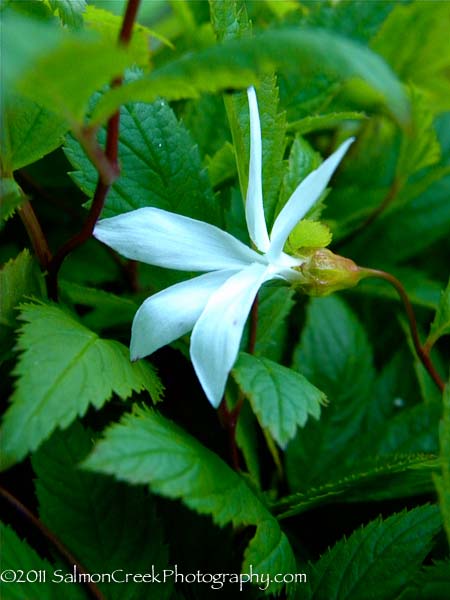
Gillenia trifoliata
Best delicate perennial for adding graceful beauty to shaded garden spaces.

Bowman's Root, scientifically known as *Gillenia trifoliata*, is a delightful and resilient American wildflower. It forms a refined clump with wiry, mahogany-tinted stems and trifoliate leaves. The plant produces decorative red calyces and white star-like flowers in loose terminal panicles, blooming from June to July. Its persistent sepals, ornate seed heads, and crimson autumn foliage provide extended seasonal interest. This plant thrives in various conditions, including open woodlands and moderately moist, well-drained soil, tolerating both sun and partial shade. It is hardy to zone 4.
$10.15
Owner Satisfaction
4.7
/ 5
Category Rank
29
/ 3269
#29 in Landscaping & Garden Plants
Price vs Category Average
-63%
Below average
Mature Size
232
/ -' H x ' W
Who it's for
- Gardeners seeking continuous visual appeal from a single plant
- Homeowners with challenging low-light garden beds and woodland settings
- Busy gardeners desiring beautiful, healthy plants without constant attention
Who should skip it
- Impatient gardeners expecting immediate, robust growth and quick results
- Gardeners in drought-prone regions or those with very dry soil
- Enthusiasts seeking large, showy blooms or dramatic architectural plants
Performance breakdown
Seasonal Versatility
Offers multi-season appeal from spring shoots to vibrant autumn foliage.
Environmental Adaptability
Thrives across diverse light conditions and varied soil types with ease.
Pollinator Impact
Attracts essential garden pollinators with its delicate, star-like floral display.
Maintenance Requirements
Resilient nature minimizes the need for constant intervention or specialized care.
Hardiness Reliability
Proven zone 4 durability ensures consistent performance in colder climates.
Structural Aesthetic
Refined mahogany stems provide a sophisticated architectural element to garden beds.
Key Specs
Mature Size
2-3' H x 2' W
Bloom Time
June-July
Hardiness Zones
4
Sun Exposure
Full Sun, Partial Shade
Water Needs
Medium
Soil Type
Loamy, Sandy, Clay, Well-drained, Acidic, Alkaline
Drought Tolerant
Yes
Plant Type
Perennial, Wildflower
Features
- Dainty yet tough American wildflower
- Bronzy-pink spring shoots and mahogany-tinted stems
- Lacy white star-like flowers with red calyces
- Persistent sepals and ornate seed heads
- Crimson autumn foliage
- Tolerates varied conditions including sun or shade
- Requires well-drained soil
- Hardy to zone 4
What customers say
Customers consistently praise the exceptional quality of the Gillenia trifoliata received from Digging Dog Nursery. Reviewers frequently highlight the plants' robust health and careful packaging upon arrival, ensuring a strong start in their gardens. Many appreciate the plant's reliable performance and graceful aesthetic as it establishes, adding delicate beauty to shaded areas. The consistent vigor and successful establishment reported by gardeners underscore a high level of satisfaction with this particular offering, making it a trusted choice for perennial enthusiasts.
Know before you buy
This plant is quite adaptable and grows well in loamy, sandy, or clay soils, provided they are well-drained. It performs best in moderately moist conditions and can tolerate both acidic and alkaline soil pH levels.
Yes, it is versatile regarding light exposure. It thrives in both full sun and partial shade, making it a great choice for open woodland settings or mixed borders.
Gillenia trifoliata offers a long season of interest. You get bronzy-pink spring shoots, star-like white flowers in early summer, ornate seed heads, and vibrant crimson foliage in the autumn.
Yes, it is considered drought tolerant. While it prefers medium moisture, its resilient nature allows it to handle periods of dryness once it has settled into your garden.
Since this plant reaches a mature size of approximately 2 to 3 feet in height and 2 feet in width, you should space them at least 2 feet apart to allow for proper air circulation and growth.
Yes, its white, star-like flowers are attractive to various pollinators. It is an excellent choice if you are looking to support local bee and butterfly populations.

Still have a question?
Ask Hayley anything about this product before you decide.