

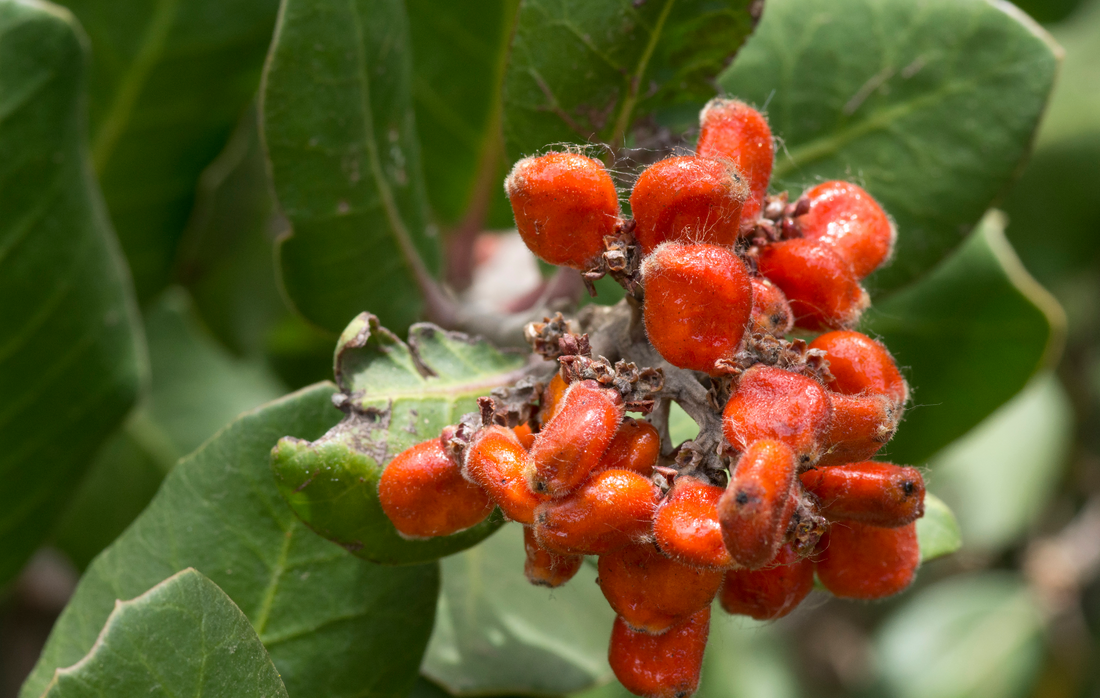
Rhus integrifolia, Lemonade Berry
Best resilient shrub for sustainable, low water landscaping.

The Rhus integrifolia, commonly known as Lemonade Berry, is an evergreen shrub native to California. It can grow up to ten feet high and wide, featuring small pink or white flowers that bloom from winter through spring. The fruit is tart, making it an edible, though not sweet, addition to the garden. This plant is exceptionally tough and excels in erosion control on dry slopes and banks. While slow-growing, young plants benefit from pinching to encourage dense growth, and it can be sheared for hedges or screens. Be cautious, as the sap may cause a reaction similar to poison oak, and its pollen can be allergenic.
$12.00
Owner Satisfaction
4.5
/ 5
Category Rank
1914
/ 3331
#1914 in Bushes & Shrubs
Price vs Category Average
-70%
Below average
Botanical Name
Rhus integrifolia
/ Rhus integrifolia
Who it's for
- Gardeners in drought-prone regions seeking low-water, attractive plants
- Nature enthusiasts wanting to support local wildlife in their garden
- Home cooks and foragers interested in native edible plants
Who should skip it
- Small garden owners or those preferring compact, low-maintenance shrubs
- Impatient gardeners seeking fast-growing, instant impact plants
- Gardeners with heavy clay soils or poor drainage issues
Performance breakdown
Erosion Control
Deep root systems provide superior stabilization for dry, sloped landscapes.
Drought Tolerance
Thrives in arid conditions with minimal supplemental water once fully established.
Wildlife Attraction
Reliably draws local pollinators and birds to your garden ecosystem.
Deer Resistance
Foliage remains largely untouched by browsing deer in most environments.
Maintenance Versatility
Easily sheared into formal hedges or left to grow naturally.
Safety Profile
Sap and pollen require careful handling for those with sensitivities.
Key Specs
Botanical Name
Rhus integrifolia
Family
Anacardiaceae
Mature Height
3-30 feet
Mature Spread
3-20 feet
Hardiness Zone
25 F
Water Needs
Low
Sun Exposure
Full sun to partial shade
Growth Rate
Moderate
Features
- Tough and resilient shrub for erosion control
- Edible tart fruit
- Attracts birds and butterflies
- Drought tolerant once established
- Deer resistant foliage
- Suitable for container planting
- Fire resistant properties
What customers say
Customers consistently express high satisfaction with the robust health and vigor of the plants received, underscoring their exceptional quality. Many highlight the effortless establishment and minimal ongoing care required, making them a remarkably reliable choice for diverse garden environments. The plant's inherent drought tolerance and adaptability are frequently cited as significant advantages, providing excellent value for individuals seeking sustainable and beautiful landscaping solutions. Its resilience and attractive natural form contribute to a very positive overall experience, cultivating strong appreciation among gardeners.
Know before you buy
While the plant is beautiful, use caution when pruning. The sap can cause a skin reaction similar to poison oak in sensitive individuals, and the pollen may trigger allergies.
Yes, it works well as a hedge or screen. Because it is slow-growing, you can pinch young plants to encourage a denser shape or shear them regularly to maintain a specific size.
Once established, the Lemonade Berry is highly drought-tolerant. It thrives with low water, making it an excellent choice for water-wise gardens or dry slopes.
Yes, the fruit is edible, though it is quite tart rather than sweet. It is often used to make a refreshing, lemonade-like drink, which is how the plant earned its common name.
Absolutely. Its tough, resilient root system makes it a top choice for stabilizing dry slopes and banks where other plants might struggle to take hold.
Yes, the foliage is generally avoided by deer, making it a reliable option for landscapes where browsing wildlife is a common concern.

Still have a question?
Ask Hayley anything about this product before you decide.