

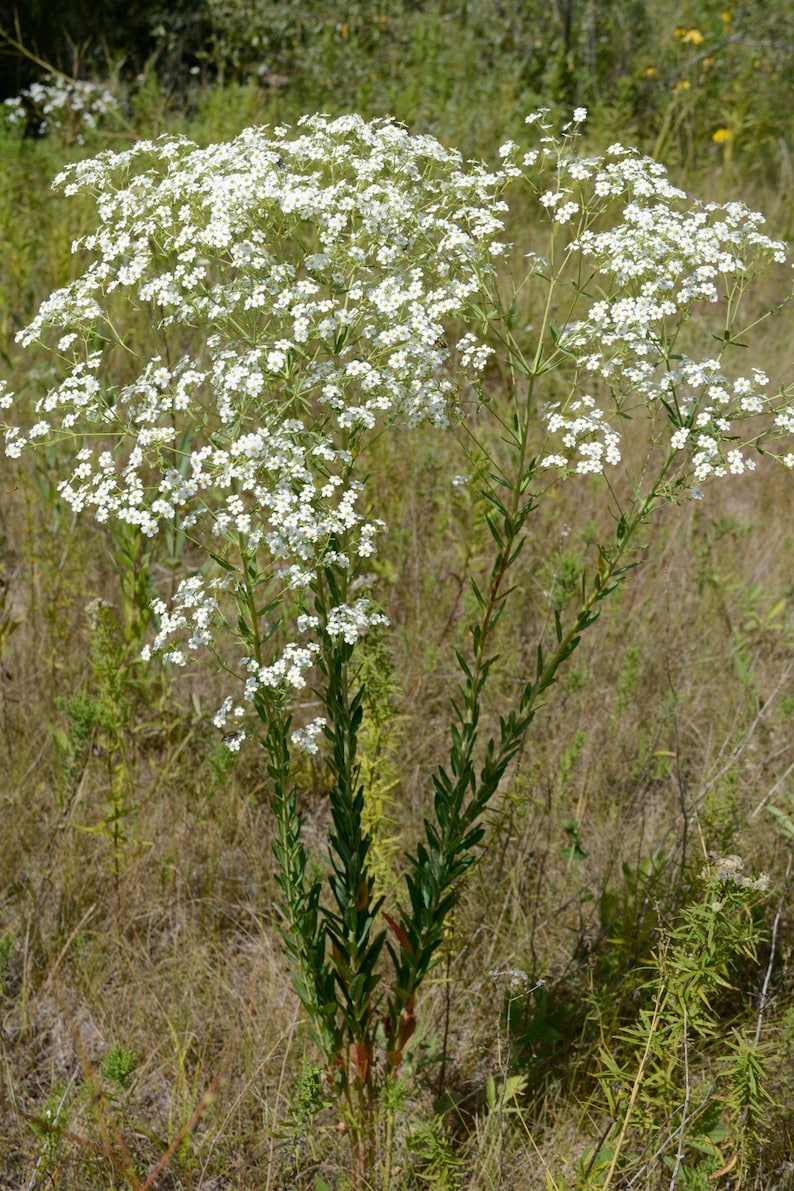
Euphorbia corollata, Flowering Spurge
Best vibrant perennial for enhancing diverse garden landscapes.

Euphorbia corollata, commonly known as Flowering Spurge, is a native perennial plant that thrives in dry prairies, roadsides, and savannas. It features branching clusters of tiny white flowers, often referred to as 'wild baby's breath,' which are actually bracts. This species spreads via rhizomes and is well-suited for ecological restoration and native plant gardening. It prefers full to part sun and medium to medium-dry soil conditions, reaching a mature height of 12-36 inches. The plant is drought-tolerant and requires low maintenance, making it an excellent choice for naturalistic landscapes.
$7.00
Owner Satisfaction
4.5
/ 5
Category Rank
2378
/ 4677
#2378 in Landscaping & Garden Plants
Price vs Category Average
-75%
Below average
Botanical Name
Euphorbia corollata
/ Euphorbia corollata
Who it's for
- Gardeners aiming to create a vibrant, eco-friendly habitat for wildlife.
- Homeowners seeking low-maintenance, water-efficient plants for sustainable gardens.
- Busy individuals desiring beautiful, resilient plants without constant upkeep.
Who should skip it
- Families with young children or pets, and gardeners with sensitive skin.
- Gardeners preferring contained growth or those with limited space.
- Individuals desiring year-round visual interest or evergreen garden elements.
Performance breakdown
Drought Resilience
Thrives in dry conditions with minimal supplemental watering once established.
Pollinator Attraction
Clusters of white bracts act as a magnet for native bees.
Maintenance Effort
A low-intervention perennial that demands very little from the gardener.
Restoration Utility
Ideal for naturalizing landscapes and supporting local ecological diversity.
Growth Habit
Rhizomatous spreading requires careful placement to manage its natural expansion.
Visual Impact
Delicate white blooms provide a sophisticated, airy texture to garden beds.
Key Specs
Botanical Name
Euphorbia corollata
Common Name
Flowering Spurge
Plant Type
Perennial
Mature Height
12-36 inches
Sun Exposure
Full Sun to Part Sun
Soil Type
Medium to Medium-Dry Soil
Soil Drainage
Well-drained
Water Needs
Medium to Medium-Dry
Features
- Native Bare Root Plant
- Drought Tolerant
- Attracts Pollinators
- Low Maintenance
- Spreads via Rhizomes
- Showy Flower Clusters
What customers say
Customers consistently praise the exceptional quality of the plants received. Many highlight the robust health and vigorous growth of the specimens upon arrival, often noting secure and thoughtful packaging that ensures safe transit. Buyers appreciate the plants' ability to thrive quickly in their new environments, reflecting excellent care prior to shipping. This consistent delivery of healthy, vibrant plants underscores a strong sense of value, making it a favored choice for those seeking reliable additions to their gardens.
Know before you buy
Flowering Spurge spreads via rhizomes, meaning it will gradually colonize an area over time. While it is excellent for naturalizing in meadow-style gardens, you should provide it with enough space or use it in areas where its spreading habit is desired rather than restricted.
No, once established, Euphorbia corollata is highly drought-tolerant. It is adapted to dry, well-drained soil conditions and typically thrives without supplemental irrigation.
Yes, Flowering Spurge is a valuable nectar source for various native pollinators. Its clusters of white bracts are particularly effective at drawing in bees, wasps, and butterflies throughout the summer.
No, this species prefers medium to medium-dry soil and requires excellent drainage. Planting it in consistently wet or heavy clay soil can lead to root rot and poor plant health.
Plant your bare root Euphorbia as soon as possible after receiving it. Ensure the roots are buried at the appropriate depth in well-draining soil and water them thoroughly to help them settle into their new environment.
Not at all. It is a low-maintenance native plant that requires very little intervention once it has taken root. Its primary needs are simply a sunny location and soil that does not hold excess moisture.

Still have a question?
Ask Hayley anything about this product before you decide.