

 Miyabi
Miyabi Artisan Santoku Knife
Best precision tool for home cooks seeking professional-grade Japanese performance.

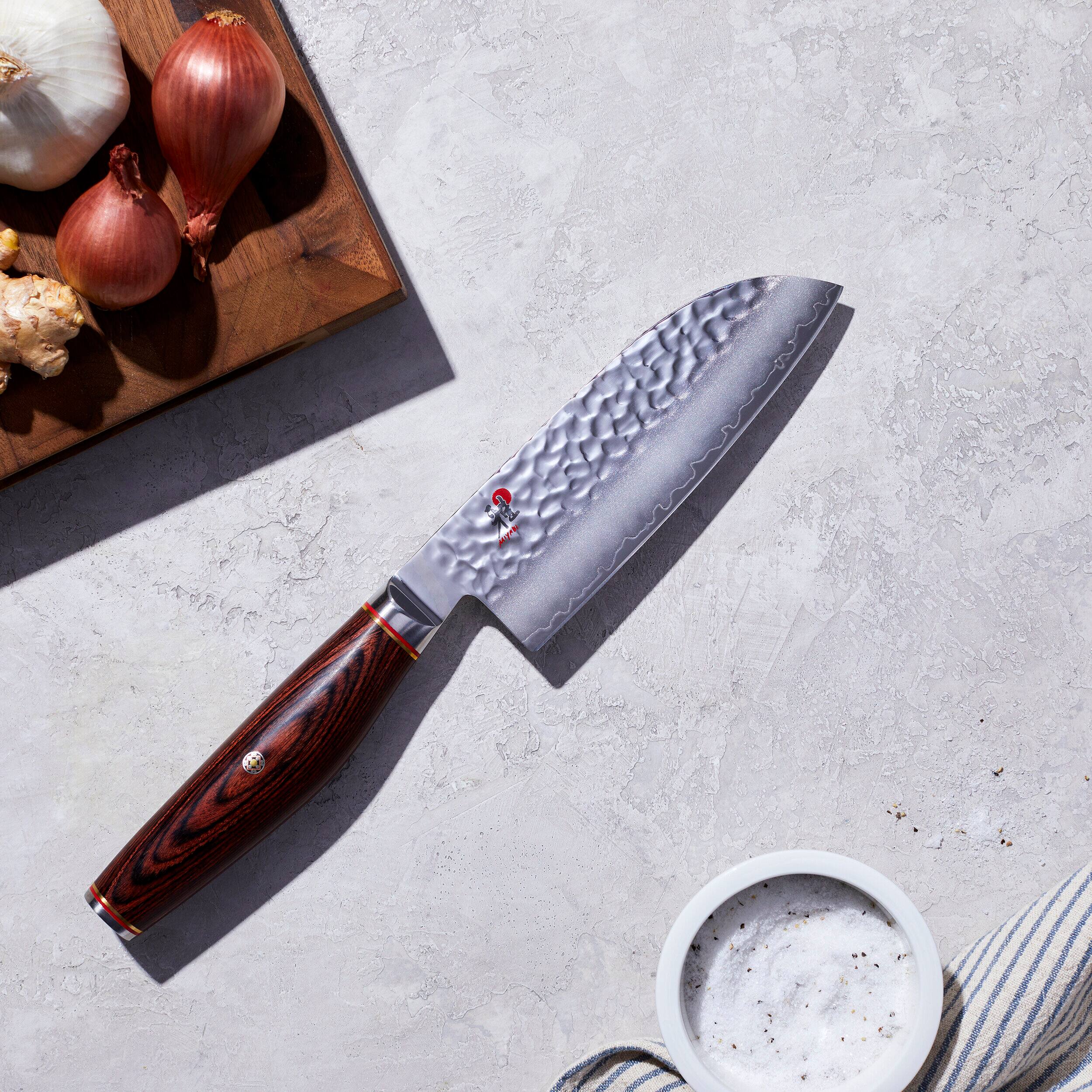
Discover the Miyabi Artisan Santoku Knife, a blend of exquisite craftsmanship and superior cutting performance. Its core is forged from SG2 micro-carbide steel, ice-hardened to Rockwell 63 for enduring sharpness and durability. The blade features a distinctive hammered "Tsuchime" finish and a scalpel-sharp edge, perfected by traditional Japanese sharpening techniques. Designed for versatility, this Santoku knife is ideal for chopping, dicing, and mincing. The ergonomic Cocobolo Rosewood Pakkawood handle offers a comfortable and secure grip, ensuring precision and control for years of culinary excellence.
$194.99
Owner Satisfaction
4.7
/ 5
Category Rank
578
/ 5007
#578 in Kitchen Knives
Price vs Category Average
+46%
Above average
Blade Core
2
/ Micro-carbide SG
Who it's for
- Home cooks seeking professional-grade precision and long-lasting sharpness
- Culinary enthusiasts who value aesthetic beauty and non-stick performance
- Right-handed chefs prioritizing comfort and balanced, ergonomic control
Who should skip it
- Busy cooks needing a low-maintenance, heavy-duty kitchen tool
- Budget-conscious shoppers looking for an entry-level kitchen knife
- Left-handed users requiring an ambidextrous or neutral handle design
Performance breakdown
Edge Retention
SG2 steel core maintains a razor-sharp edge through extensive daily use.
Ergonomic Comfort
The Pakkawood handle provides a secure, balanced grip for fatigue-free chopping.
Food Release
Hammered Tsuchime finish effectively prevents ingredients from sticking to the blade.
Versatility
Ideal geometry for effortless dicing, mincing, and precision vegetable prep work.
Build Quality
Exceptional Japanese craftsmanship ensures a durable, high-performance culinary tool.
Maneuverability
Compact 5.5-inch length offers superior control for intricate kitchen tasks.
Key Specs
Blade Core
Micro-carbide SG2
Blade Hardness
Rockwell 63
Handle Material
Cocobolo-rosewood pakkawood
Blade Length
5.5 inches
Blade Material
Stainless Steel
Knife Type
Santoku Knife
UPC
035886331016
Country of Origin
Japan
Features
- SG2 micro-carbide steel core for exceptional sharpness
- Rockwell 63 hardness ensures lasting edge retention
- Hammered "Tsuchime" finish for aesthetic appeal and function
- Ergonomic Cocobolo Rosewood Pakkawood handle for comfort
- Scalpel-sharp edge from expert Japanese sharpening
- Versatile Santoku design for multiple kitchen tasks
- Durable stainless steel cladding for longevity
What customers say
This Miyabi Artisan Santoku knife earns high praise for its exceptional quality and stunning design. Reviewers consistently admire the artistic hammered finish and rich wood handle, viewing it as a culinary masterpiece. Performance is a key strength; the SG2 steel blade arrives razor sharp, making slicing and dicing effortless. Users appreciate the superior edge retention, reducing sharpening needs. The D-shaped handle offers comfort during extended use. While the extreme hardness demands careful handling and hand washing to prevent chipping, dedicated cooks find the artistry and long-term performance justify the premium investment.
Know before you buy
SG2 is a high-performance powdered steel that allows for a much finer edge and superior hardness. This means the knife stays sharper for significantly longer than standard stainless steel blades, though it requires careful handling to prevent chipping.
Beyond its striking visual appeal, the hammered finish creates small air pockets between the blade and the food. This helps reduce friction and prevents ingredients from sticking to the side of the knife while you chop.
A 5.5-inch Santoku is an excellent choice for those who prefer a more agile, compact knife. It is perfect for precise dicing, mincing, and smaller prep tasks, though you may prefer a longer blade if you frequently process large items like watermelons or large roasts.
Pakkawood is a highly durable, water-resistant composite, but it should still be kept dry. Avoid soaking the knife in water or putting it in the dishwasher, as this can cause the wood to swell or degrade over time.
Because the steel is very hard, it holds an edge exceptionally well, but it does require more patience and skill to sharpen than softer knives. We recommend using high-quality whetstones and avoiding pull-through sharpeners, which can damage the delicate edge.
No, you should avoid glass, ceramic, or stone boards entirely. These surfaces are harder than the knife's edge and will cause it to dull or chip almost immediately; always stick to wood or high-quality plastic boards.

Still have a question?
Ask Hayley anything about this product before you decide.