

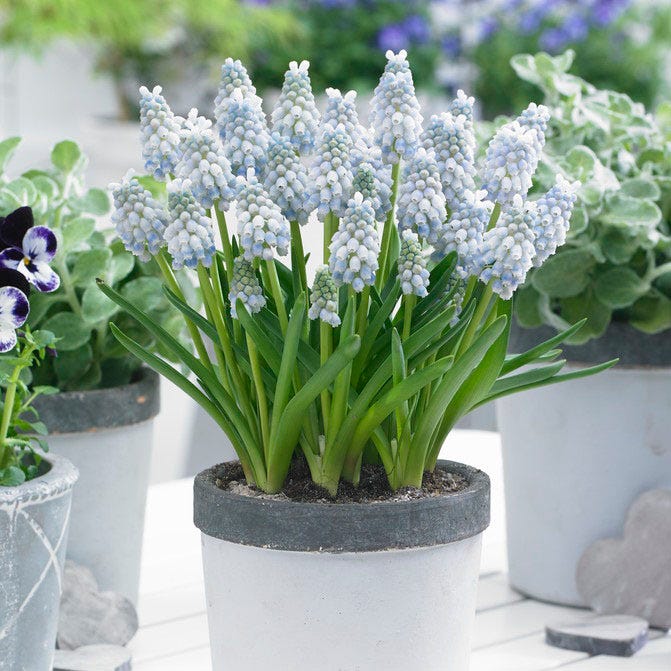
Peppermint Grape Hyacinth
Best low-maintenance choice for gardeners wanting fragrant, deer-resistant spring groundcover.

Discover the enchanting Peppermint Grape Hyacinth, a landscaper's favorite for creating captivating spring gardens. These bulbs yield unique blooms with soft blue petals that gently transition to white tips, releasing a delightful fragrance that beckons pollinators. Ideal for forming a vibrant carpet of color, they provide a perfect contrast to larger spring flowers. These bulbs naturalize beautifully, offering continuous charm and are exceptionally easy for home gardeners to cultivate. They thrive in Zones 3-9, preferring full sun to partial shade, and are best planted in the fall for mid-to-late spring blossoms.
$13.49
Owner Satisfaction
4.6
/ 5
Category Rank
717
/ 3088
#717 in Plant & Flower Bulbs
Price vs Category Average
-43%
Below average
USDA Hardiness Zones
3456789
/ , , , , , ,
Who it's for
- Gardeners seeking unique, eye-catching spring color
- Low-maintenance gardeners wanting reliable, long-term perennial displays
- Homeowners struggling with hungry deer and garden pests
Who should skip it
- Gardeners desiring a long-lasting, multi-month floral display
- Perfectionists who prioritize tidy, manicured garden aesthetics
- Small-space gardeners concerned about aggressive plant spread
Performance breakdown
Naturalization Potential
Bulbs establish and multiply reliably for years of effortless spring color.
Pest Resistance
Strong deterrent properties keep deer and squirrels away from your garden.
Pollinator Impact
Fragrant blooms serve as a vital early-season magnet for local bees.
Ease of Cultivation
Low-maintenance requirements make these an ideal choice for novice home gardeners.
Versatility
Adapts perfectly to borders, containers, or naturalized woodland groundcover displays.
Visual Appeal
Unique color gradient offers a sophisticated aesthetic for spring landscape design.
Key Specs
USDA Hardiness Zones
3, 4, 5, 6, 7, 8, 9
Mature Height
4-8 inches tall
Plant Life Cycle
Perennial
Flower Type
Hyacinth
Sun Exposure
Full Sun, Partial Sun
Bloom Season
Spring
Planting Season
Fall
Deer Resistance
Deer Resistant
Features
- Unique soft blue to white tipped blooms
- Fragrant and attracts pollinators
- Resistant to deer and squirrels
- Naturalizes well for continuous beauty
- Excellent for groundcover and borders
- Suitable for container planting
- Easy for home gardeners to grow
- Works well as cut flowers
What customers say
Customers overwhelmingly praise the 'Peppermint Grape Hyacinth' for its unique, refreshing two toned coloration. The visual appeal, featuring white tips blending into pale blue or lavender bases, offers a delightful twist on traditional spring bulbs. Reviewers consistently note the reliable performance; bulbs arrive healthy and establish quickly. A major highlight is its effectiveness as a naturalizer, returning robustly and spreading gently over successive years. This low maintenance hardiness ensures high long term satisfaction. While minor initial color variations sometimes occur, the overall consensus confirms this variety delivers excellent, dependable aesthetic value for early spring gardens.
Know before you buy
These bulbs should be planted in the fall. This allows them to establish roots before the ground freezes, ensuring they are ready to bloom in mid-to-late spring.
Yes, Peppermint Grape Hyacinth is considered deer and squirrel resistant. While no plant is entirely immune to hungry wildlife, these are generally avoided by pests that prefer tastier garden bulbs.
Absolutely. Their compact size makes them an excellent choice for containers or window boxes. Ensure your pot has good drainage to keep the bulbs healthy throughout the winter.
No, these are perennials that naturalize well. If planted in a suitable environment, they will return and potentially spread on their own each spring, providing continuous beauty for years.
These bulbs are best planted at a density of 16 per square foot. This spacing creates a dense, lush carpet of color that is ideal for groundcover or filling in gaps between larger spring perennials.
Yes, they are known to attract pollinators, specifically bees. Their mild fragrance and early spring bloom time make them a helpful food source for pollinators just emerging from winter.

Still have a question?
Ask Hayley anything about this product before you decide.
Ready to buy?
$13